I am an absolute sucker for music-related memoirs. If you’re an artist I love and take the time to write a book, I can practically guarantee you I will read it. I don’t even have to like your music; if I think you have a compelling story to tell or someone I respect recommends your book, I’m all in. The book section at Paradise Found Records is always well-stocked with new and used titles. I previously wrote about some of my favorites of the genre. Here are five recent releases I’d recommend.
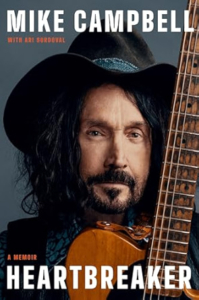 Mike Campbell–Heartbreaker, A Memoir
You may not know who Mike Campbell is but you know his music. As lead guitarist in Tom Petty and the Heartbreakers from the group’s inception, he co-authored some of Petty’s most popular songs and lent sterling guitar work to nearly every song Petty released in his long, illustrious career. Campbell is highly introverted and thus functioned as a perfect sideman: while contributing much to what made Petty one of the most successful American rock acts of the last fifty years, he was perfectly content to stay in the background and avoid the spotlight except for when he was adding screaming guitar solos to classics like “American Girl” and “Runnin’ Down a Dream.” Campbell was also willing to do some of Petty’s dirty work for him: when bandmates pushed back on what they felt was unfair compensation for their contributions, Campbell was the one to remind them that they were in the Tom Petty business, a fact he also had to remind himself of on occasion. Campbell’s memoir can be a little technical at times–multiple sections address his style with detail only a fellow guitar player can appreciate–but Heartbreaker is still required reading for all Petty fans. It’s an inside look at the journey from struggling Gainesville rock band to musical legends with a unique perspective only Campbell can provide, including on Petty’s tragic, unexpected passing at sixty-six in 2017.
Notable excerpt, regarding a classic song Campbell wrote for Mick Jagger:
“Mick loved the song. But the next thing I knew, Tom said he wanted it for his record. I thought, what a coincidence; what interesting timing. But I was happy. I would have gotten a kick at having written a song for Mick, but that’s where my songs belonged, on Tom Petty records. I couldn’t wait to hear what he had done with it.
Tom wrote lyrics and brought it in a few days later. We set up with the whole band to run through it. I asked Tom what it was called.
“It’s called “You Rock Me.”
I stared at him.
“It’s called “You Rock Me?”
“I know, I know.”
We played the song through with the whole band. It sounded great.
Benmont looked over at Tom.
“Are you singing, “You rock me?”
“Yeah.”
“You rock me, baby?”
“Yeah.”
Benmont looked appalled.
“That’s just…” Benmont shook his head. “You can’t sing ‘you rock me, baby. You just can’t.’”
“I know, I know.”
Tom came back a few days later and said he’d fixed it. Steve kicked us off and we launched into the song. Tom stepped up to the mic and sang. Every word was the same. But when we played the chorus, instead of singing, “You rock me, baby,” Tom sang, “You wreck me.”
I shook my head. Incredible. Half a syllable, and it changed everything. How did he do it?”
 Cher–The Memoir, Part One
Cher might not fit the classic description of a rocker, but she was a member of the Wrecking Crew session band that played on many hits in the sixties and she worked extensively with Phil Spector. Part one of her memoir focuses on her first thirty-five years, including her launch into music and later TV stardom, and ends just as she begins acting (part two, covering the second half of her life, is due to be released this fall). In addition to its memories of an early life filled with amazing stories about growing up poor amidst Hollywood royalty, the book chronicles her rise and fall (and rise again) starting in the mid-sixties, when she parlayed her friendship with Sonny Bono into a highly successful career. Sonny and Cher struggled to break through until they visited the UK in 1965. Their hippie-gypsy hybrid fashion sense took the Brits by storm, knocking The Beatles (temporarily) off the top of the charts and paving the way for stardom when they returned home to Los Angeles. After a few years of hits, they were seemingly on the way to obscurity playing in nightclubs until, out of boredom as much as anything else, they added humorous banter to their stage show. As they finetuned the interplay, they transformed their act and ultimately created one of the most popular television variety shows of the seventies, hosting a who’s who of musical legends including David Bowie, Elton John and Bette Midler among many others. One revelation about the partnership: while Sonny Bono exploited her both financially and emotionally, Cher still harbors a surprising warmth for her longtime partner.
Notable excerpt, regarding Cher’s joining the Wrecking Crew:
“One day in the summer of 1963, Darlene Love didn’t show up at the studio because her car had broken down. Phillip (Spector) was already behind schedule in recording the Ronettes’ next two singles, “Be My Baby” and “Baby, I Love You,” and this delay frustrated him. Time cost money, so he told everyone, “Let’s get something down anyway and I’ll play with it and see how it sounds. Sonny, you join the backup girls.” We all knew that if he asked for Sonny, he was desperate.
Undeterred, Sonny bounced up to the microphone like a puppy, and then I heard Phillip utter the words, “Okay, Cher, you too. Get up there. Sonny tells me you can sing.”
I almost fainted. Was he fucking nuts? Darlene was one of the greatest singers of all time. I’d be too low for the girls and too high for Sonny. I tried to explain my vocal qualifications to Phillip, but he interrupted me, saying “I don’t care, I just need noise. Get out there and sing.”
But what if my noise was off-key? I thought with a shiver. I stepped up to the microphone for the first time in my life and took my place next to Sonny, Fajita and Gracia. I was shaking so much I had to lock my knees together and fix my focus on the little speaker that allowed us to hear the rest of the song. There were no headphones at Gold Star; we all just played and sang. It was so intimidating. Phillip asked Gracia, “Okay, tell me what you’ll be singing,” and she went through her notes. When he did the same with Fanita, I thought I’d pass out on the floor if he asked me, as I wouldn’t have a clue what to say. I was planning on just listening to the girls and doubling up on Sonny’s part, then hiding until it was over. Thank God Phillip never asked, but then I think he kind of knew not to.
We were counted in and started singing, and somehow a sound came out that seemed okay. I didn’t know if it was luck or Larry’s skills. I began to relax, but then Phillip made everyone stop. “Cher,” he called. “Step back.” I wasn’t quite sure what he meant at first, but Sonny made a gesture for me to move away from the mic, so I took one step away and we started again.
Darlene was back in the studio the following day, and there was a collective sigh of relief. That woman was a force of nature, and still is, and the only one to stand up to Phillip if she didn’t like something. The moment she walked back in, she took one look at me standing in her place and shook her head. Then she threw it back and let out that great big laugh of hers as everyone exhaled. Then she looked at Sonny and said, “What you doing here?” She joined us at the mic, and when we started singing, the same thing happened as the previous day. “Step back, Cher. Step back,” Phillip instructed. “You’re still cutting through.” This went on and on until I must have been three feet from the others and virtually up against the wall. Eventually Darlene quipped, “She’ll be in Studio B at this rate!”
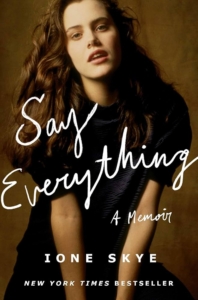 Ione Skye–Say Everything, A Memoir
Ione Skye might not be a musician, but she’s the next best thing, a rock’n’roll muse who has dated, married and/or inspired many successful artists. The daughter of famed British folkie Donovan, Skye is more widely known for an excellent film and television career that has seen her play featured roles with an eye for quality over commercial appeal. Skye entered into a long relationship with Anthony Kiedis of the Red Hot Chili Peppers when she was only sixteen and he was twenty-four, and stuck with him through his extended struggle with heroin (which he wrote about in “Under The Bridge,” the group’s breakthrough hit). She broke up with Kiedis just as he was on the brink of stardom to start a relationship with mutual crush Adam Horovitz, better known as Ad-Rock of The Beastie Boys, the group that played a huge role in bringing rap to a white audience for the first time. Skye later flirted with and then acknowledged her bisexuality, which is what ultimately ended her marriage to Horovitz. Through a film career that included working with a then-unknown Keanu Reeves and later John Cusack in arguably Cameron Crowe’s best movie, Say Anything, Skye slowly grows more comfortable in her own skin, culminating in developing a relationship with the father that abandoned her as a child and a still-going-strong union with Australian musician Ben Lee.
Notable excerpt, regarding the most iconic scene in Say Anything:
“As Cameron told me the day we met, Say Anything was very much a love letter to music. Throughout filming, there were endless discussions about what song should play when Lloyd boom box-serenades Diane outside her window. At the time, no one knew the scene would become iconic, but we knew it was significant–the “Romeo under the trellis” moment, as Cameron put it. He’d originally written the scene while listening to Billy Idol’s “To Be a Lover,” so that song made it into the first draft of the script, but we all knew it wasn’t right. After weeks of exchanging mixtapes, Cameron and Johnny decided Lloyd would blast “Turn the Other Way” by Fishbone up to Diane’s window.
Johnny and I were scheduled to film our respective sides of the scene on separate days, which I was glad about. Johnny was being cynical about the whole thing. He thought Lloyd’s grand romantic gesture would come off as cheesy. “Why does he have to hold the boom box up?” he kept arguing to Cameron. “It makes him subservient. I want to try it with the box on the car beside me and I’ve got my arms folded and I’m defiant. She broke up with me! I’m pissed!”
Cameron felt certain that Lloyd should be all in, not holding on to his cool by sitting down, but he agreed to shoot the scene both ways to keep the peace. (Lazslo later confessed to Cameron that he hadn’t bothered to load film into the camera for Johnny’s version; he was that sure Cameron was right.) Initially, they filmed on the street outside Diane’s house, but Cameron wasn’t happy with the footage. Later, we were doing the 7-Eleven scene where Lloyd brushes glass out of Diane’s path (a nod to the movie’s origin story), and Lazslo noticed a tree-lined stretch of park across the street. “That’s our boom box spot!” he said. “Quickly, before the sun goes down!” The crew rushed over to set up the shot, and with minutes to spare, Johnny did the scene, wielding his portable stereo like a dare. The mixture of heartbreak and defiance he brought to the moment made it perfect.
Well, almost perfect. When Cameron reviewed the footage, he realized the funky, raucous “Turn the Other Way” made Lloyd come off less as a thinking teenager’s heartthrob and more like a crazed Fishbone fan. So the song search began again. Eventually, Cameron would have an epiphany while listening to his wedding mixtape. When Peter Gabriel’s “In Your Eyes” came on, he knew it was the one. Three other films were vying for Gabriel’s big song, but Cameron went to the mat to get it, and the rest is history.”
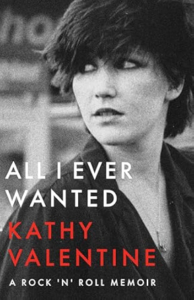 Kathy Valentine–All I Ever Wanted, A Rock’n’Roll Memoir
One of the more notable reunion sets at Coachella this year was by The Go-Go’s. While I can’t claim to be much of a fan, the fact is they were the first all-female group to top the charts with songs they’d written and performed themselves, an accomplishment that culminated in their induction into the Rock’n’Roll Hall of Fame in 2021. The group is known for their power pop and hits that included “We Got The Beat” and “Vacation,” but they emerged from the Southern California punk scene alongside bands like X and Black Flag. Valentine’s memoir is a surprisingly compelling look at a career in music, from her first being a fan of the band to the thrill of connecting with the other members and ultimately switching from bass to guitar to join up. The Go-Go’s were ahead of their time, and the book chronicles the group from early rehearsals through their fracture and ultimate reunion. Through it all Valentine struggles with a lifelong alcohol addiction that fogs many of her experiences and poisons her relationships with family and friends until she finally gets sober in her fifties. I can’t say it made me want to listen to more Go-Go’s, but I certainly respect them a lot more now.
Notable excerpt, regarding the impact of publishing royalties on band harmony:
“With a couple million records sold and being on the road for eight months straight, a significant payday was long overdue. At our accounting firm I sat on the edge of my chair in an office waiting for my check to be issued. Looking at it, I swooned. I had made over $300,000, almost $800,000 in present value. It was more money than I knew what to do with (of course, the accountants had ideas for that). My head reeled. I’ll buy a car! Definitely get a cool place to live. Almost out the accountant’s door, I turned back, suddenly curious. “Hey, what did everyone else get?” Surely it couldn’t be a secret. Everyone had busted ass to make the record sell. The numbers came: Charlotte, with most of the songwriting and the biggest hit, got a huge check. Next came Jane, just under Charlotte’s. My amount came next. Our lead singer, the star with the charisma and voice, made less than me, and Gina, the hardworking drummer who had turned the band into contenders, made the least. I had to let it swish around in the wash cycle of my brain for a while: this didn’t bode well for the band. The first real money had been paid, and there were some awfully big gaps.
It didn’t take long before I got the call. Gina had asked too. Our little drummer was a stick of dynamite, her fuse always lit and ready to explode. Most of the time that meant just playing with all her heart and soul, like a machine, making every ounce of her energy pour into her limbs and onto her drum kit. Other times it meant being a manic, loudmouthed ballbuster, yelling out truths most people would rather not hear. Gina had a straightforward world view: hard work pays off; be loyal and fair; honor your family and friends. The discrepancy in our earnings violated her sense of justice, and I couldn’t blame her. It gave me a big problem because everyone had to be happy and it had to be fun, or else all would be lost. My number-one priority had become keeping the band intact. I was living the experience of a lifetime and I wanted it to last.
Some issues aren’t clear-cut, black and white, one way is right and one way is wrong. I’ve had a lot of years to think about songwriting and income issues in bands and have my thoughts and opinions about it, but that’s all they are. There’s no law or manual. In the case of the Go-Go’s, the money issue became like a sixth unwanted member, always in the room.”
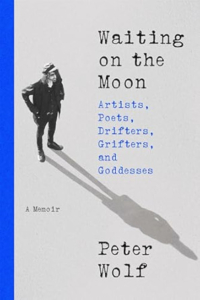 Peter Wolf–Waiting on the Moon: Artists, Poets, Drifters, Grifters, and Goddesses
Peter Wolf was first known to some as Woofa Goofa, the late-night rock disc jockey on Boston’s WBCN in the sixties; later he became the lead singer of the J. Geils Band, the Boston band that mixed rock and R&B and struggled to break through commercially for ten records before finally hitting the top ten with “Centerfold” and “Freeze Frame” in the early eighties. Wolf’s excellent new memoir contains surprisingly little about the J. Geils Band; instead, it is a fascinating look at the life of a painter, singer and first and foremost culture fiend. Wolf saw and hung out with Bob Dylan in the clubs, lived with David Lynch in college, married Faye Dunaway, and spent serious time carousing with Van Morrison, Keith Richards, Mick Jagger and many other musicians, poets, professors and playwrights that drove American art in the second half of the twentieth century. Above all else Wolf is a lover of the blues. His stories of hanging out with Muddy Waters, James Cotton, Howlin’ Wolf and John Lee Hooker reveal an aesthete who was both a fellow traveler and fan. His roles as DJ and rock star helped him become close friends with many of his idols, and this highly entertaining book is filled with engrossing stories and encounters that make it very hard to put down.
Notable excerpt, on hanging out on Willie Nelson’s bus:
“Willie and his mentor, the eighty-one-year-old honky-tonk pioneer Ray Price, were in the front lounge passing each other a large vape pipe attached to a hookah sitting on a table in front of Willie. Ray, once roommates with Hank Williams, was an important originator of the real whiskey-soaked honky-tonk sound, with a young Willie Nelson on bass in his band.
“Hey, Merle (Haggard), what’s in that bottle you’re holding?” Ray asked. “How about giving my coffee a bit of a booster shot?”
“Same for me,” said Willie. I thought Willie had stopped drinking, but maybe this was a special occasion. Merle obliged and said, “Pete, grab yourself one of those coffee cups and let me give you a refill.” They passed the pipe to Merle, who held on to it, taking several long, deep inhales.
“We just did some recording, and Pete here set up a whole studio in the dressing room.”
“Hope it’s a hit,” Willie said.
Merle continued chatting as he reluctantly handed back Willie’s pipe after I passed on having some. Merle began telling a story about the first time I met his longtime right-hand man, Fuzzy Owen, one of the architects of what became known as the Bakersfield Sound in country music. Merle said, “One night Pete came to my show and joined me and the band in catering. Pete sat right across the table from Fuzzy, and I introduced him. He seemed really excited about meeting Fuzzy, so he starts asking Fuzzy all sorts of questions about how he produced his records back in the day, how big the studios were, what kind of microphones he used, what amplifiers did the players have, all sorts of questions. Fuzzy just kept nodding his head and sometimes just saying, “Yes, sir, them sure was the good old days.’ Pete keeps asking Fuzzy questions, and Fuzzy just keeps nodding his head, until I finally had to break in and say, ‘Pete, you’re just wasting your breath. He ain’t got on his hearing aids. Fuzzy’s stone deaf. He can’t hear one damn word you’re saying!’”
Both Willie and Ray started laughing as it was the funniest thing either of them had ever heard.”

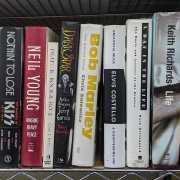
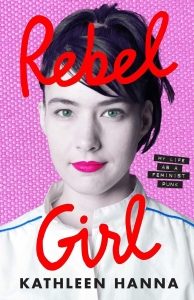 Kathleen Hanna–Rebel Girl: My Life as a Feminist Punk
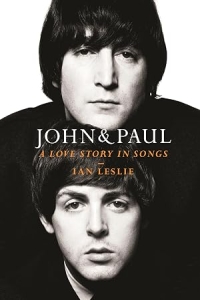 Ian Leslie–John & Paul: A Love Story in Songs
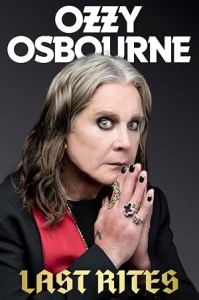 Ozzy Osbourne–Last Rites
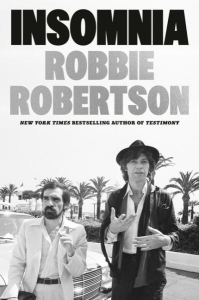 Robbie Robertson–Insomnia
 Mark Ronson–Night People: How to Be a DJ in ‘90s New York City
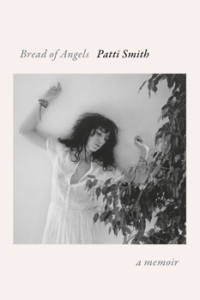 Patti Smith–Bread of Angels
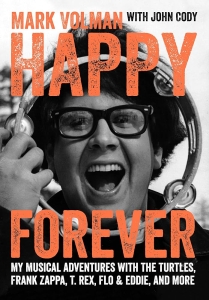 Mark Volman–Happy Together: My Musical Adventures with The Turtles, Frank Zappa, T. Rex, Flo & Eddie, and More
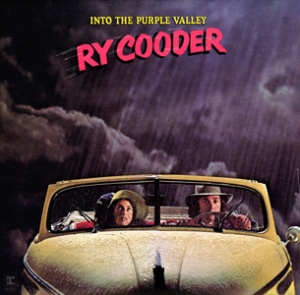 Ry Cooder–Into the Purple Valley (1972)
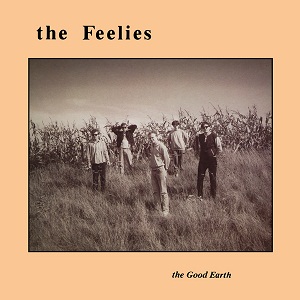 The Feelies–The Good Earth (1986)
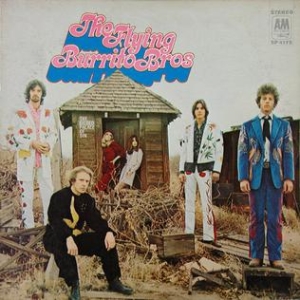 The Flying Burrito Brothers–The Gilded Palace of Sin (1969)
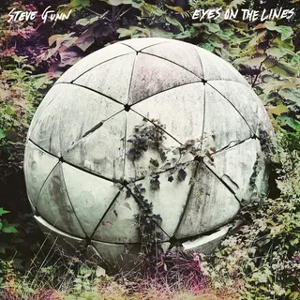 Steve Gunn–Eyes on the Lines (2016)
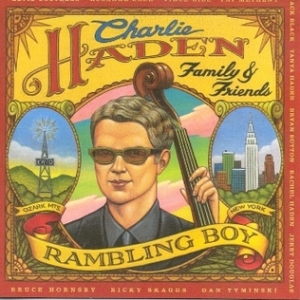 Charlie Haden Family & Friends–Rambling Boy (2008)
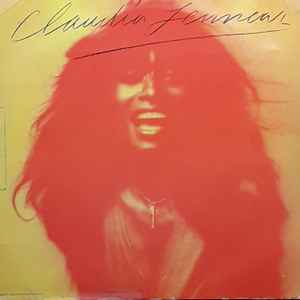 Claudia Lennear–Phew! (1973)
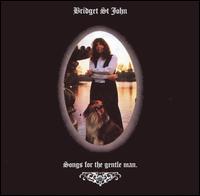 Bridget St. John–Songs for the Gentle Man (1971)
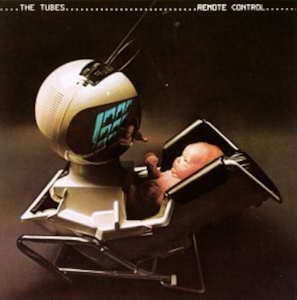 The Tubes–Remote Control (1979)
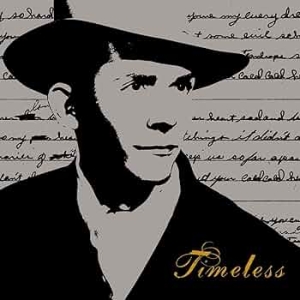 Various Artists–Hank Williams: Timeless (2003)
 Jonathan Wilson–Gentle Spirit (2011)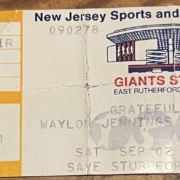
 We spotted a taxi and piled in. “Take us to the Meadowlands!” we shouted. The driver turned to us, sounding like he’d never heard of the place before, and said “OK, but that will be $20 in cash up front” ($20 in 1978 was around $100 in 2026 dollars). My friends, scared from our encounter with Mr. “It’s not safe for you here,” responded by freaking out. “No!” they argued. “If we give him our money he can do anything with us,” suggesting that maybe our driver might moonlight as a serial killer? There was a lot of anxious energy in that cab. “Look,” I said, trying to be the voice of reason, “he’s a cab driver. What do you think he’s going to do? Besides, we need to get out of here ASAP.” Placated, they handed over the $20 and the cabbie pulled away from the taxi stand.
 We soon arrived and started aimlessly wandering around the lot the way tripping teenagers do. I had my extra ticket to sell and at some point I took it out and said “Who wants to buy one?” I was quickly surrounded by a crowd since the concert was sold out. There I was, ticket in hand, when a rather rough-looking guy (more Deadhead homeless-rough than the mobster-rough guy back at the Newark train station) went into a crouch and punched me in the jaw, grabbing my extra ticket! I was so high that the entire event seemed to unfurl in slow motion. I can still see him extending his right arm until it hit my face. The punch wasn’t strong enough to do any damage or cause any pain, but I was still shocked. He disappeared in a flash. It was truly a “WTF just happened?” moment and an important life lesson: about how to effectively and discretely sell an extra ticket, how to act when you’re tripping balls, and about adopting street smarts while in East Rutherford. I ultimately saw the Grateful Dead 271 times and have been to over a thousand shows in the ensuing years, and that is still the only time in my life I’ve been mugged.
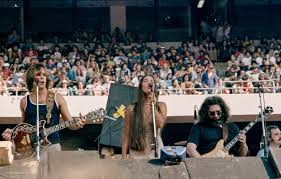
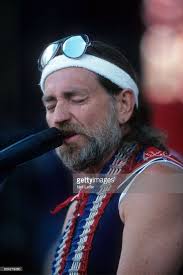 I was still alone in my seat when the New Riders came on a few hours later (the guy who’d mugged me was shockingly a no show). My only memory of their set is that they played “New New Minglewood Blues,” which I thought was curious since the Dead covered the song as well–and indeed, the Dead played it during their opening set a few hours later that afternoon. When Willie Nelson came on I was still solo. Growing up in Philadelphia I had very little exposure to Nelson’s music (or to any country or bluegrass for that matter), so the only song he played that day that I recognized was “Crazy,” which I only knew because Linda Ronstadt had recently covered it. Mickey Raphael, Nelson’s harmonica player, had a memorable presence and added much to the sound. I also remember hearing “Whiskey River” and “Mammas Don’t Let Your Babies Grow Up to be Cowboys” for the first time, but that’s pretty much it.
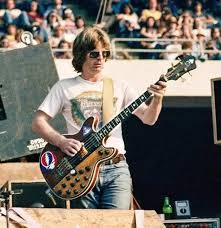
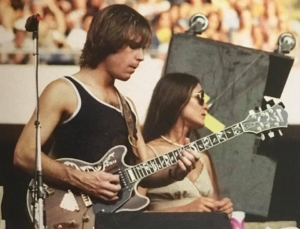 “Eyes of the World” dissolved into a drum solo, which they’d started to incorporate nightly earlier in 1978; this “Rhythm Devils” segment would become a mid-second set staple for the rest of their career. Unfortunately, there was a seven p.m. curfew that the Dead had completely forgotten about. Shortly after the drum solo began the band realized they only had ten minutes left to play, rushed back onstage and did a perfunctory “Sugar Magnolia” followed by an even shorter “One More Saturday Night” encore. It was a big buzzkill and highly disappointing to all in attendance. It felt like we’d been robbed of a complete show.
 Welcome to the latest edition of the Paradise Found Records blog. A couple of years back I shared some of my
  Several things set Japanese pressings apart from records manufactured in other countries. Perhaps the most important is audio quality, which may be subjective but is still widely acknowledged. I have multiple records from the Original Master Recordings series by Mobile Fidelity Sound Labs produced by Analogue Productions. As much as I love how many MoFi’s sound, Japanese presses often sound better. I am mostly referring to Japanese albums made before 1990; since then there are fewer differences between records manufactured in the USA and Japan.
 A second reason Japanese vinyl sounds better is because the music is mixed differently. Because such a high percentage of Japanese record buyers live in apartments, audio engineers make the records brighter, reducing some of the bass/low end and boosting the mid- and high-ranges (you can always raise the bass level to compensate). Of course your results and ears may vary, but I find it easy to tell the difference when comparing Japanese to non-Japanese editions. In a handful of instances, including Fleetwood Mac’s Rumours and Tusk and Some Girls by the Rolling Stones, the US stampers were used at the Japanese pressing plant with the higher quality vinyl, and the sound is noticeably better. The lack of background hiss and surface imperfections makes for an ideal listening experience.
 Obi’s are also desirable because of the implied condition of the vinyl. It’s safe to say that anyone who took special care to keep an obi in pristine shape did the same thing with the record itself, since it’s very easy for an obi to get torn or abused with repeated use. Foxing, rust-colored spots on printed materials that can develop over time as a result of oxidation and humidity, is inevitable unless a record is stored the best way: in plastic liners, shelved (not stacked) in a location without high humidity or extreme temps. A well-treated obi is a well-treated record, as close to new as you can get once the seal has been broken.
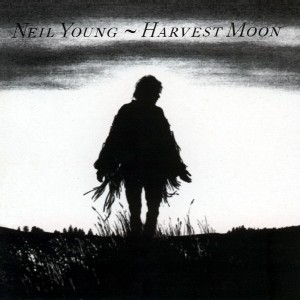 10) Harvest Moon (1992)
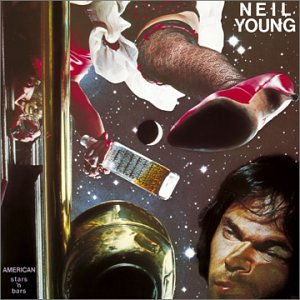 9) American Stars N’ Bars (1977)
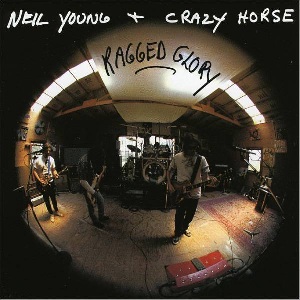 8) Ragged Glory (1990)
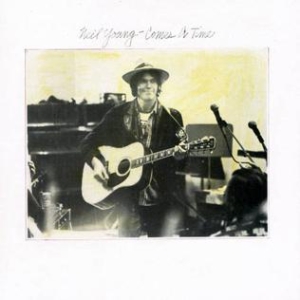 7) Comes a Time (1978)
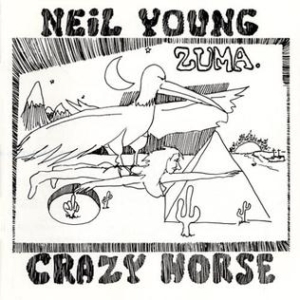 6) Zuma (1975)
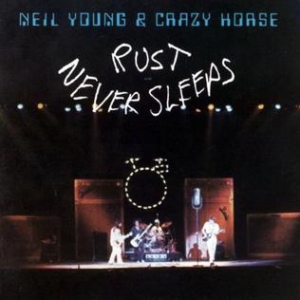 5) Rust Never Sleeps (1979)
 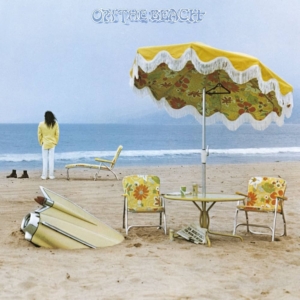 4) On The Beach (1974)
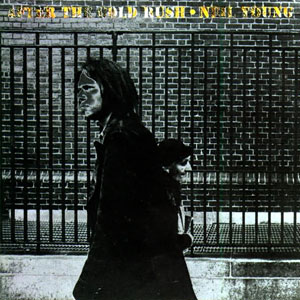 3) After the Gold Rush (1970)
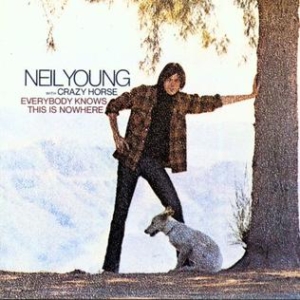 2) Everybody Knows This is Nowhere (1969)
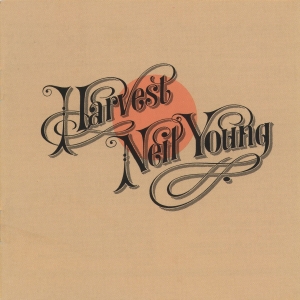 1) Harvest (1972)
 Spinal Tap II: The End Continues, the sequel to one of the funniest and most influential films of all-time, hits theaters on September 12, with all of the original actors plus cameos by luminaries including Paul McCartney and Elton John.
 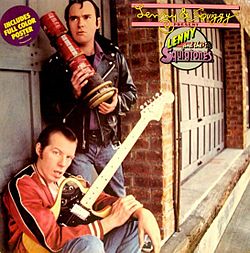 The principals in Spinal Tap are Tufnel (Christopher Guest), David St. Hubbins (Michael McKean) and Derek Smalls (Harry Shearer). Guest went on to become the leading auteur of mockumentaries; his
  “Bad” Blake (Crazy Heart, 2009)
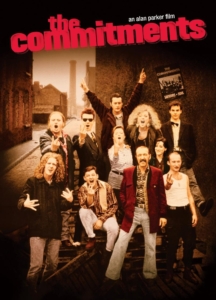 The Commitments (The Commitments, 1991)
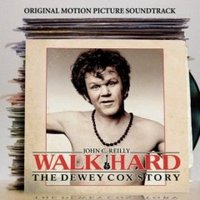 Dewey Cox (Walk Hard: The Dewey Cox Story, 2007)
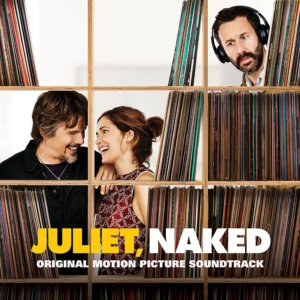 Tucker Crowe (Juliet, Naked, 2018)
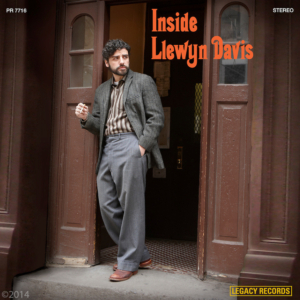 Llewyn Davis (Inside Llewyn Davis, 2013)
 Soggy Bottom Boys (O Brother, Where Art Thou?, 2000)
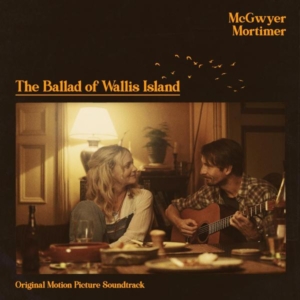 McGwyer Mortimer (The Ballad of Wallis Island, 2025)
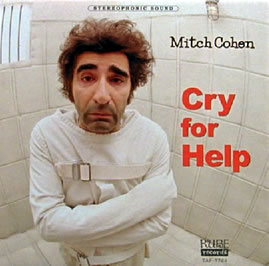 Mitch and Mickey (A Mighty Wind, 2003)
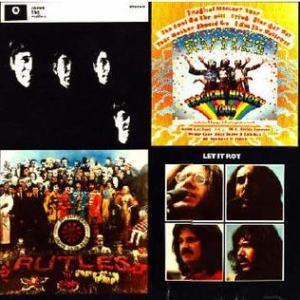 The Rutles (All You Need is Cash, 1978)
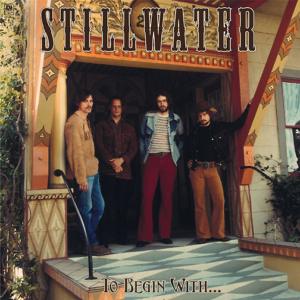 Stillwater (Almost Famous, 2000)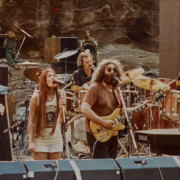
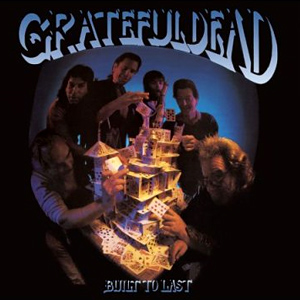 Built to Last (1989)
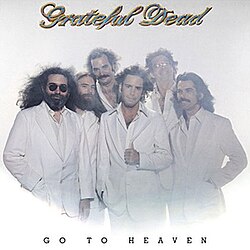 Go To Heaven (1980)
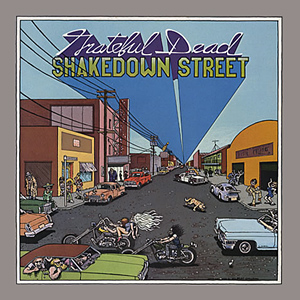 Shakedown Street (1978)
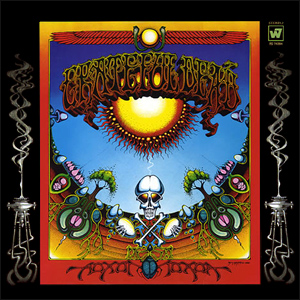 Aoxomoxoa (1969)
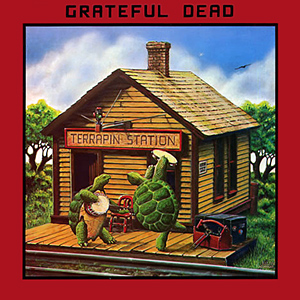 Terrapin Station (1977)
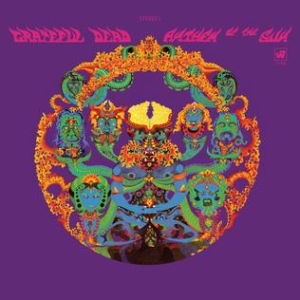 Anthem of the Sun (1968)
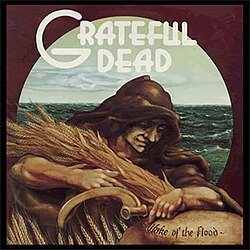 Wake of the Flood (1973)
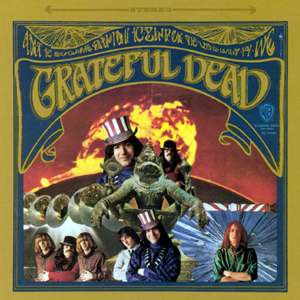 Grateful Dead (1967)
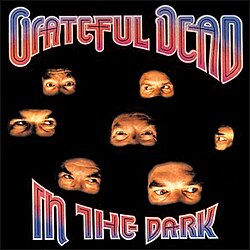 In the Dark (1987)
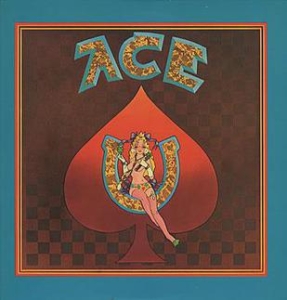 Ace (1972)
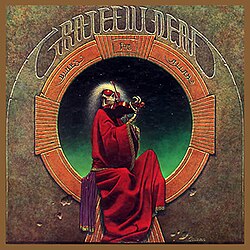 Blues for Allah (1975)
 From the Mars Hotel (1974)
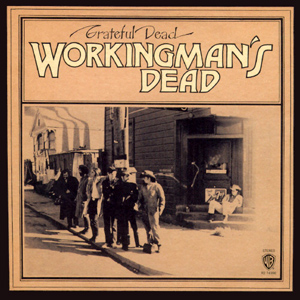 Workingman’s Dead (1970)
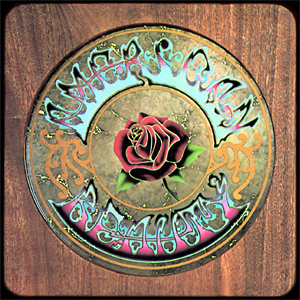 American Beauty (1970)
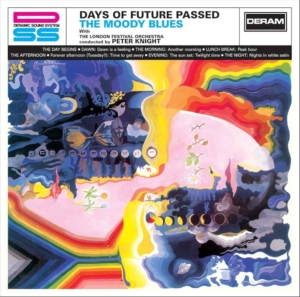 The Moody Blues – Days of Future Passed (1967)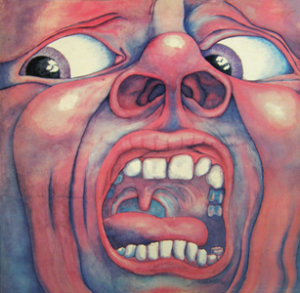
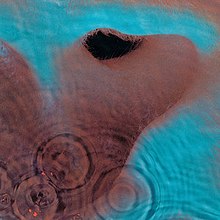 Pink Floyd – Meddle (1971)
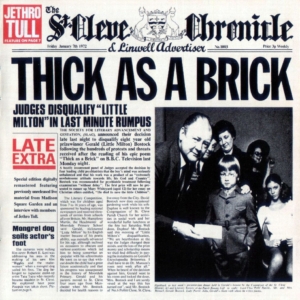 Jethro Tull – Thick as a Brick (1972)
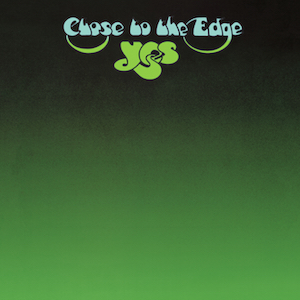 Yes – Close to the Edge (1972)
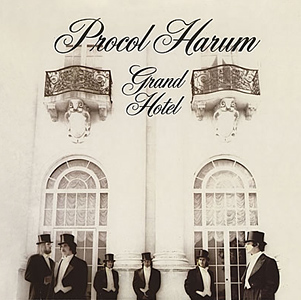 Procol Harum – Grand Hotel (1973)
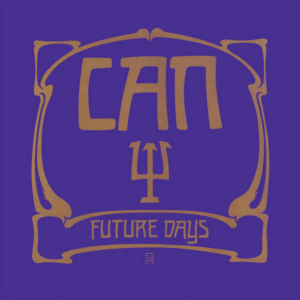 Can – Future Days (1973)
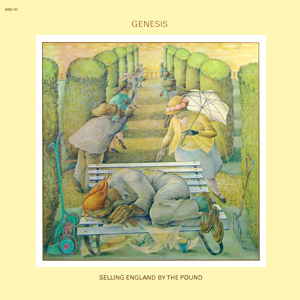 Genesis – Selling England By The Pound (1973)
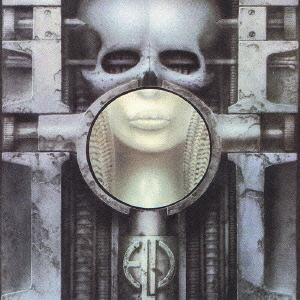 Emerson, Lake & Palmer – Brain Salad Surgery (1973)
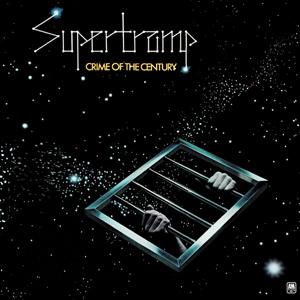 Supertramp – Crime of the Century (1974)
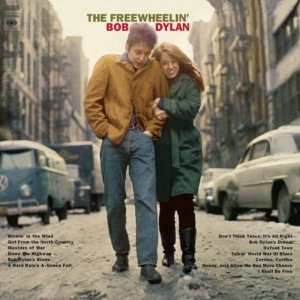 The Freewheelin’ Bob Dylan (1963)
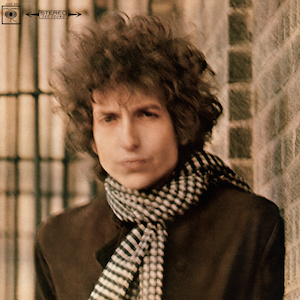 Blonde on Blonde (1966)
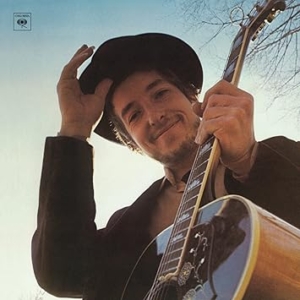 Nashville Skyline (1969)
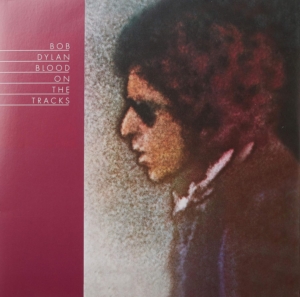 Blood on the Tracks (1975)
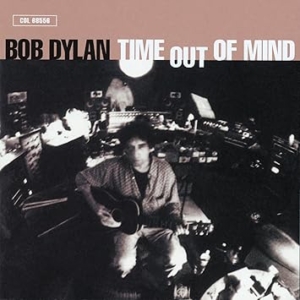 Time Out of Mind (1997)