
Music is Life: The Time I Got Mugged at a Grateful Dead Show
This blog is the first in a series of personal musical memories that I will be running under the “Music is Life” banner.
————————————————————————————————————————————————————–
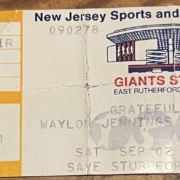
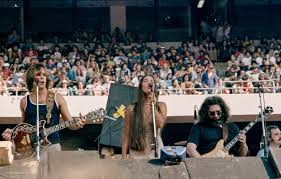
Saturday September 2, 1978 was my third Grateful Dead concert, at Giants Stadium (aka the Meadowlands) in industrial East Rutherford, New Jersey. Willie Nelson and the New Riders of the Purple Sage opened (despite being on the ticket, Waylon Jennings did not appear). My first Dead show had been the prior September at Englishtown, New Jersey; I was only slightly familiar with their music at that point. My second Dead show was in May 1978 at The Spectrum in Philadelphia, my hometown. The nine months between the two concerts were my senior year of high school, during which I dove deep into the Grateful Dead’s canon in no small part thanks to live tape trading with my friend Dave, who had two tape decks and thus the ability to make copies (at which he was highly skilled; he later became a film editor). Dave and I were both travelling down the Grateful Dead rabbit hole in search of Jerry Garcia-related sounds.
I went to the Meadowlands with my friend Dan and his friends Steve and Julie. I would never see Steve and Julie again. The following morning I was leaving to move to Boulder for my freshman year at CU. Dan and I were introduced by our parents that summer who mistakenly thought we were about to attend the same college (he was actually starting at DU in the fall). Even though it was a Saturday afternoon show, the four of us opted to take the train north from Philly on Friday night with only the vaguest notion of how to actually get to the stadium. We had reserved seats in the stands, bought from the drug store a block from my house that had a Ticketmaster machine and an overstuffed binder filled with codes for every show on the East Coast (that’s how you bought out-of-town concert tickets in those days). I forget who bailed but I had an extra I was planning to sell when we got there. We met at 30th Street Station in Center City Philadelphia, dropped acid, and got on the next Amtrak for Newark.
By the time we got off the train at the downtown Newark station it was after midnight. We were all very high and very clearly out of our comfort zone. My eyes were dilating furiously; every time I saw someone who looked like they might be able to help with directions, they would morph into a dangerous and/or publicly intoxicated individual by the time they came into sharper focus. We stumbled out of the station–I can only imagine how green we looked–and scratched our heads wondering how to get to the venue from downtown Newark. Within a few minutes someone who looked like he might be friendly (he was clean shaven and wearing a suit and tie) approached us. When we asked him where the Meadowlands were, he said “Just go down that main street there about eight miles and you’ll run into it.” “Great,” we responded, but before we had moved he added “Oh, you don’t walk down that street at this time of night,” like we’d be risking our lives if we did. Then a second later he said “And you don’t stand here either.” At that point we all looked at each other, thinking “Is this guy threatening us?” and quickly walked away.
 We spotted a taxi and piled in. “Take us to the Meadowlands!” we shouted. The driver turned to us, sounding like he’d never heard of the place before, and said “OK, but that will be $20 in cash up front” ($20 in 1978 was around $100 in 2026 dollars). My friends, scared from our encounter with Mr. “It’s not safe for you here,” responded by freaking out. “No!” they argued. “If we give him our money he can do anything with us,” suggesting that maybe our driver might moonlight as a serial killer? There was a lot of anxious energy in that cab. “Look,” I said, trying to be the voice of reason, “he’s a cab driver. What do you think he’s going to do? Besides, we need to get out of here ASAP.” Placated, they handed over the $20 and the cabbie pulled away from the taxi stand.
A short time later we were driving north on the New Jersey Turnpike and the stadium appeared like Oz in the distance. “Take us there! That’s where we need to go,” we practically screamed. “I don’t know how to get you over there,” he responded. “Then pull over!” we said. Now as anyone from Northern New Jersey knows, Giants Stadium was surrounded by the finest New Jersey swampland, home to countless buried bodies and very little in the way of what you might call a garden, even though New Jersey dared to put the words “Garden State” on its license plates. But across the swamp we ran in the middle of the night toward the stadium lights, careful not to get stuck in the muck.
 We soon arrived and started aimlessly wandering around the lot the way tripping teenagers do. I had my extra ticket to sell and at some point I took it out and said “Who wants to buy one?” I was quickly surrounded by a crowd since the concert was sold out. There I was, ticket in hand, when a rather rough-looking guy (more Deadhead homeless-rough than the mobster-rough guy back at the Newark train station) went into a crouch and punched me in the jaw, grabbing my extra ticket! I was so high that the entire event seemed to unfurl in slow motion. I can still see him extending his right arm until it hit my face. The punch wasn’t strong enough to do any damage or cause any pain, but I was still shocked. He disappeared in a flash. It was truly a “WTF just happened?” moment and an important life lesson: about how to effectively and discretely sell an extra ticket, how to act when you’re tripping balls, and about adopting street smarts while in East Rutherford. I ultimately saw the Grateful Dead 271 times and have been to over a thousand shows in the ensuing years, and that is still the only time in my life I’ve been mugged.
So there I was, intoxicated with one less ticket and a slightly sore jaw in the Meadowlands parking lot at three a.m. The doors didn’t open for seven hours so we had nothing but time on our hands. For no apparent reason we opted to get in the line for general admission field seating despite having tickets for reserved seats in the stands; why I can’t remember, but obviously we weren’t in peak mental condition. After waiting many hours, the gate finally opened and the line progressed in an unformed mass toward the entry point. As we moved through a large, burly guard saw my ticket and reached through the crowd, grabbed me and said “You don’t have a GA field ticket.” Of course my friends made it through the scrum untouched. The last time I saw them they were moving onto the floor, leaving me friendless and with nothing to do but go to the entrance gate for the reserved stands. I proceeded to my seat after they opened up.
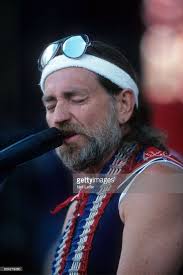 I was still alone in my seat when the New Riders came on a few hours later (the guy who’d mugged me was shockingly a no show). My only memory of their set is that they played “New New Minglewood Blues,” which I thought was curious since the Dead covered the song as well–and indeed, the Dead played it during their opening set a few hours later that afternoon. When Willie Nelson came on I was still solo. Growing up in Philadelphia I had very little exposure to Nelson’s music (or to any country or bluegrass for that matter), so the only song he played that day that I recognized was “Crazy,” which I only knew because Linda Ronstadt had recently covered it. Mickey Raphael, Nelson’s harmonica player, had a memorable presence and added much to the sound. I also remember hearing “Whiskey River” and “Mammas Don’t Let Your Babies Grow Up to be Cowboys” for the first time, but that’s pretty much it.
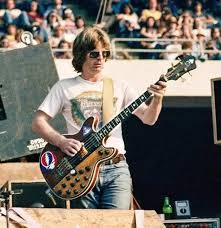
A little while later the Grateful Dead came out. This was the first Dead set I saw where I was more familiar with their repertoire. I had been largely clueless about anything other than “Truckin'” and “Sugar Magnolia” at Englishtown (they only played the former that day), and I missed the entire first set at The Spectrum due to a prior obligation acting in the first half of my high school play. The opening set was heavy on Shakedown Street material–that album would come out a few months later–and the high point was an excellent “Lazy Lightning” into “Supplication” closer. I was a big fan of the Bob Weir-fronted 1976 Kingfish album that opened with that pair of songs, and they sounded even better live.
At some point between the first and second sets my friend Dan finally showed up, more than six hours after we’d been separated trying to get on the floor; I’m not sure if he got bored or if his guilt over abandoning me had finally gotten the better of him. Whatever the reason, I was grateful to finally have company. The Dead opened the second set with “Good Lovin’,” the only time I ever saw them open a set with it (it was the first track on Shakedown Street), although it was a fairly tepid rendition. Then they launched into an epic, hourlong “Scarlet Begonias” into “Fire on the Mountain” into “Estimated Prophet” into “Eyes of the World” sequence that was easily the highlight of the day. They had started segueing from “Scarlet Begonias” into “Fire on the Mountain” the prior year (I had read about it in Relix magazine) and the latter song was still unreleased at that point. I told Dan during the “Scarlet Begonias” jam that they were probably going to play “Fire on the Mountain” next. When they did he looked at me like I was a Deadhead savant. Even then I drew immense pleasure from guessing what their next song would be.
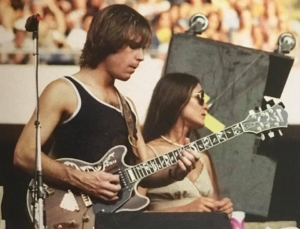 “Eyes of the World” dissolved into a drum solo, which they’d started to incorporate nightly earlier in 1978; this “Rhythm Devils” segment would become a mid-second set staple for the rest of their career. Unfortunately, there was a seven p.m. curfew that the Dead had completely forgotten about. Shortly after the drum solo began the band realized they only had ten minutes left to play, rushed back onstage and did a perfunctory “Sugar Magnolia” followed by an even shorter “One More Saturday Night” encore. It was a big buzzkill and highly disappointing to all in attendance. It felt like we’d been robbed of a complete show.
Thankfully, this story does come with a happy ending. Dan and I wandered out to the parking lot aimlessly, planning to try to relocate Steve and Julie for the trip home. I remember wondering how to get back to the Newark train station and even where the Newark train station was. To my surprise, a car pulled alongside and I heard the familiar voice of Dave, my taping buddy and surely the only other person I knew among the 50,000+ people there that day. “Hey Randy,” he said, “Need a ride?” I can only imagine the look of relief on my face. I looked at Dan, who’d abandoned me to hang out on the field, said “Have fun getting home,” and climbed into the nearly-full back seat of Dave’s car. I remember he had a tape playing of the Dead from Red Rocks two months prior, and Jerry sang “Bertha” as we drove off toward the New Jersey Turnpike and home. Dave was a good friend–he also introduced me to my first girlfriend–but he never helped me more than on that day. I’m pretty sure I’d still be wandering around the Meadowlands parking lot if it wasn’t for him!
I can’t say I had much of a positive experience at my third Dead show, although the second set pre-drums segment made it worthwhile. My next Grateful Dead show would be their first show of 1979 at The Spectrum in early January, but that’s another story.
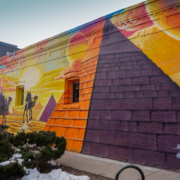
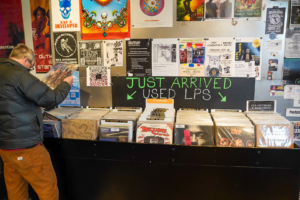 Whenever I walk into Paradise Found or any other record shop, I always make a beeline for the “Just Arrived Used LPs” section. At our Boulder store it’s near the back, where Jon Martinez, our seasoned record buyer and man with the most vinyl knowledge in Colorado, works. We buy a lot of vinyl, and everything but the pricier collectible and bargain bin material passes through the Just Arrived Used LP bins. Experienced shoppers know the best stuff often never makes it out of these racks before being grabbed. We pride ourselves on having new, sealed copies of the latest releases, but buying out of the just arrived bins is a great way to discover new (and old) music, pounce on rare stuff, and sometimes save a little on more recent releases. We also segment these bins by genre so that you don’t have to search through Folk if you’re strictly looking for Jazz. Albums that haven’t sold out of these bins ultimately get moved to the specific artist’s section in the alphabetical bins. If it takes more than thirty seconds for me to get from the front door to the just arrived bins, I’ve probably slipped and fallen on the way in my urgency to get there before someone else does.
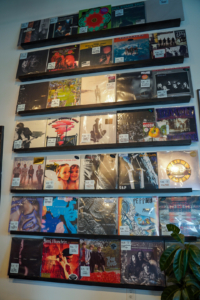 No, I’m not referring to the Pink Floyd album (although any fan of that band will tell you it’s essential), I’m talking about the wall to the left of the cash register in our Boulder store where we put the very rare, expensive items. We display some of our pricier vinyl along our east side, but those tend to be sealed box sets and recent UHQR releases (e.g. the recently reissued Steely Dan series of multi-album, 45 rpm pressings that sell new for $175 to hardcore audiophiles). While you may find audiophile material on the wall, you’re more likely to see extremely hard-to-find releases that make collectors salivate.
 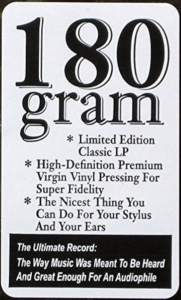 One aspect common to the vinyl resurgence of the past decade has been the proliferation of 180 and 200 gram pressings. But what does that actually mean? Back in the days before CDs, albums rarely mentioned their weight; indeed, most albums were 140 grams or less. That said, there are some specific advantages to heavier vinyl.