Top Eleven Fictional Music Acts

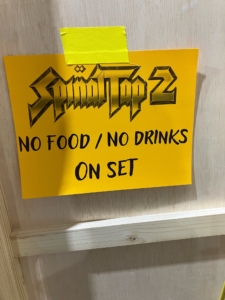
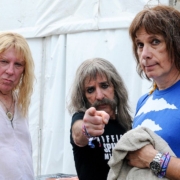
Spinal Tap II: The End Continues, the sequel to one of the funniest and most influential films of all-time, hits theaters on September 12, with all of the original actors plus cameos by luminaries including Paul McCartney and Elton John. This is Spinal Tap, released in 1983, spurred an entire genre of mockumentaries and has played on more rock tour buses than anything before or after. A largely improvised profile of a fake, struggling metal band shot by fake fan/TV commercial producer Marty DiBergi (Rob Reiner, the actual director), the film includes numerous bits that have since entered the comedy and rock lexicons: amps that go to 11, bands getting lost backstage on their way to perform, drummers dying by spontaneous combustion, props that alternately swallow bandmembers or inadvertently wind up ten percent of the intended size, and on and on. No surprise it took forty years to attempt a follow-up; the original is perfect and will be impossible to top. Filming for the sequel began in early 2024 (the picture at left came in a text from a friend of a friend that worked on the project). It may be a fine line between stupid and clever, as guitarist Nigel Tufnel philosophizes, but the sequel will be lapped up by music lovers and comedy fans alike knowing it will probably land on both sides of that line.
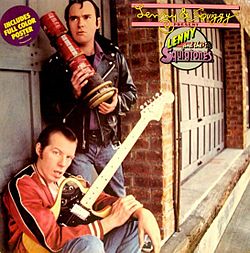
The principals in Spinal Tap are Tufnel (Christopher Guest), David St. Hubbins (Michael McKean) and Derek Smalls (Harry Shearer). Guest went on to become the leading auteur of mockumentaries; his Best in Show, A Mighty Wind, For Your Consideration and Waiting for Guffman are master classes in the art form. The fictional Spinal Tap’s genesis may have been as The Originals–forced to change their name to The New Originals by another outfit with the same moniker–but in real life Guest’s and McKean’s first recorded output as a duo is on the collectible Lenny and the Squigtones LP. That album is by Lenny (David Lander) and Squiggy (McKean), the pair that provided comic relief on Laverne and Shirley, the Happy Days spinoff.

To commemorate the return of my all-time favorite fictional band, here are my next ten favorite fictional artists in alpha order (because my list has to go to eleven), followed by another ten deserving of mention. (Warning: spoiler alerts ahead.)
“Bad” Blake (Crazy Heart, 2009)

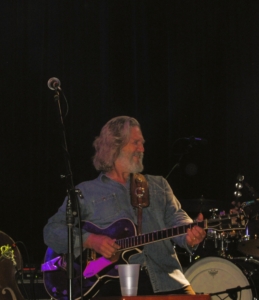
Jeff Bridges won a Best Actor Oscar for his sterling work as grizzled, alcoholic country music artist Otis “Bad” Blake. Blake struggles through midlife in a series of dingy hotels replaying his handful of hits for small bar crowds and living off his legend before connecting with Jean Craddock (Maggie Gyllenhaal), a beginning journalist looking for a profile. T-Bone Burnett breathes life into the classic country sound with the help of songwriter Stephen Bruton, who tragically died of cancer shortly before the movie’s release. Bridges, a lifelong musician, has a gravel-soaked timbre that made the soundtrack one of the better records of the year. “The Weary Kind,” the Burnett-Ryan Bingham composition sung by Bingham, won an Oscar for Best Song. (At left is a pic of Jeff Bridges from an August 2011 show at the Fox in support of his eponymous second album.)


The Commitments (The Commitments, 1991)

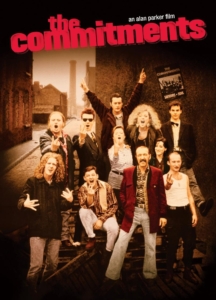
Alan Parker’s excellent film, from a book by Roddy Doyle, examines the brief but entertaining life of a Dublin R&B band. The Commitments only play four gigs before fracturing after a spotlight for critics and Wilson Pickett of “In The Midnight Hour” fame ends with the drummer beating up the lead singer and Pickett showing up late. In their brief time together lead singer Deco Cuffe’s (Andrew Strong) overbearing personality alienates every other band member while trumpeter Joey “The Lips” Fagan (Johnny Murphy) beds each of the three female background singers. Manager Jimmy Rabbitte (Robert Arkins), a soul enthusiast who pulls the group together only to watch the disparate personalities combust, finds running things to be akin to herding cats. But it all comes together for three breathtaking minutes during a performance of the Dan Penn-Chips Moman classic “The Dark End of The Street,” a soul ballad first made famous by James Carr and later covered by Aretha Franklin, Linda Ronstadt, Ry Cooder and The Flying Burrito Brothers. That brief shining moment for The Commitments in front of a mesmerized crowd captures the ephemeral quality of the best live music, even if it is an overly brief reward for the hard work required to make it happen.
 

Dewey Cox (Walk Hard: The Dewey Cox Story, 2007)

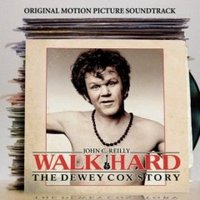
Walk Hard: The Dewey Cox Story, written by Judd Apatow and Jake Kasdan, effectively blows up the music biopic genre. Using the Johnny Cash bio Walk the Line as a starting point, the movie makes fun of voluminous storytelling cliches. In fact, Walk Hard impacts the ability to enjoy the genre altogether; after watching one can’t view serious-minded dramatic renderings (e.g. Elton John, Queen) or documentaries (e.g. Billy Joel, The Eagles) without wincing at the deployment of the predictable elements. The traumatic childhood, the unsupportive parents/spouses, the discovery by a seasoned record producer, characters who always mention their name and the year to help viewers, the division of a career into specific periods, the inevitable fall and ultimate redemption of the artist–they’re all here. In addition to Johnny Cash, Walk Hard includes hilarious references to Sam Phillips, The Beatles, Brian Wilson and The Partridge Family. Real-life mirrors the movie: when Ozzy Osbourne died seventeen days after his final show in July, it was hard not to think of Dewey Cox, who famously dies twenty minutes after his comeback concert. Must viewing for music and parody lovers. 
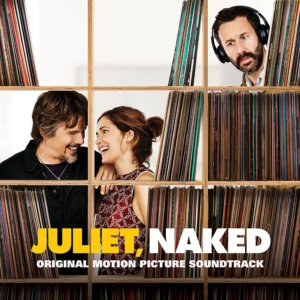
 

Tucker Crowe (Juliet, Naked, 2018)

Perhaps no twentieth century writer captures the intensity of music appreciation better than British author Nick Hornby, most famously known for High Fidelity. Juliet, Naked is a humorous, insightful look at the foibles of obsessive fandom. Duncan Thomson (Chris O’Dowd) runs a web site dedicated to Tucker Crowe (Ethan Hawke), a rootsy singer-songwriter who’s retreated into obscurity and stopped performing. When Crowe sends Thomson his long sought-after demos, Thomson’s frustrated wife Annie Platt (Rose Byrne) posts a negative review and winds up in an online dialogue with Crowe, with things developing to the point where the musician visits their southeast England town. The movie is mainly about the decline of Thomson’s and Platt’s relationship and uses the obsessed fan elements mostly for laughs even as they ring true. Hawke expertly portrays a broke, adrift musician hiding from the last embers of his notoriety (and multiple children by multiple partners) with pathos and humor, and the film ends on a hopeful note.
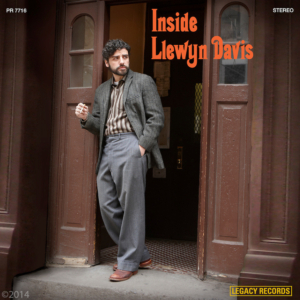
Llewyn Davis (Inside Llewyn Davis, 2013)

Sometimes the less you know about your musical heroes, the better. Llewyn Davis (Oscar Isaac) is a perfect example: a singer (loosely based on Dave Van Ronk) from the dawn of folk in Greenwich Village with talent that’s belied by an annoying, universally off-putting personality. Davis is there as the genre explodes but is unable to capitalize, much to his chagrin, which he makes sure every single person he comes into contact with knows. Inside Llewyn Davis is another in a long line of idiosyncratic Coen Brothers films with little in the way of resolution and an unlikable lead. But the music in the film, from Isaac, Carrie Mulligan, Justin Timberlake and Marcus Mumford, is consistently superb even as it’s undercut by the unpleasantness of spending time with the title character.
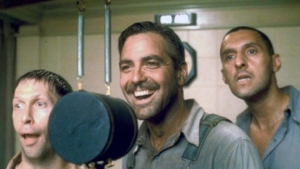
 

Soggy Bottom Boys (O Brother, Where Art Thou?, 2000)

Everyone has their favorite Coen Brothers movie–Fargo and The Big Lebowski have the most fans–but for me the duo’s pinnacle is 2000’s O Brother, Where Art Thou, whose soundtrack launched a folk and bluegrass revival and greatly expanded the fanbases of Alison Krauss, Gillian Welch and Chris Thomas King. Loosely based on Homer’s The Odyssey and full of memorable characters and lines, the story follows three Depression-era chain-gang-escapees who stumble into a recording studio and sing a few songs for blind DJ/record producer “Radio Station Man” (Stephen Root). The trio’s take on “Man of Constant Sorrow,” the folk classic first recorded in 1913, becomes a huge hit as the escapees journey to reclaim a lost treasure while evading a posse. The film culminates in a performance of the song for an enthused crowd stunned to see the trio in the flesh, following which incumbent, mid-campaign governor Homer Stokes (Charles Durning) pardons the group to curry favor with voters. The soundtrack to the film, produced by T-Bone Burnett,  is one of the biggest selling soundtracks of all-time and won three Grammys.
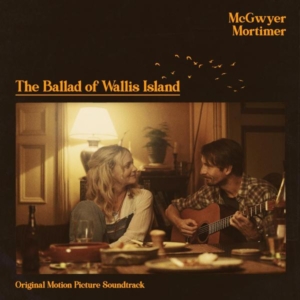
 

McGwyer Mortimer (The Ballad of Wallis Island, 2025)

Here’s a more recent example: 2025’s The Ballad of Wallis Island tells the tale of lottery winner Charles Heath (Tim Key, who starred in the wry, excellent British series The Detectorists) on a remote Welsh isle. Heath uses his windfall to reunite the folk duo McGwyer Mortimer, who’s brief turn in the spotlight was a shared love for him and his late wife. The duo show up separately only to find out that the magic, while still capable of briefly flickering, is in the past. McGwyer (Tom Basden) has never been able to replicate his success as a solo act, while Mortimer (Carrie Mulligan, in a throwback to her Inside Llewyn Davis role) has married, moved to Portland and abandoned the music business altogether. The attempted reunion doesn’t go as planned, and the film ultimately focuses on the two men trying to come to terms with the past. In the case of McGwyer, that means reconnecting with why he loves music, while with Heath it means accepting the loss of his spouse and moving on.
 

Mitch and Mickey (A Mighty Wind, 2003)

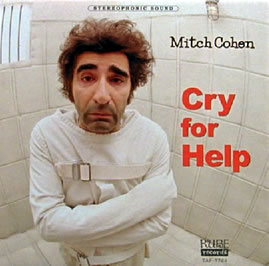
Christopher Guest took the improvisational, mockumentary spirit of This is Spinal Tap and mined it repeatedly. 2003’s A Mighty Wind, arguably his peak, spoofs the folk movement of the early sixties. Although a number of fictional acts are included–including The Folksmen, the same trio of actors in Spinal Tap–the centerpiece is Mitch and Mickey, played by, respectively, Eugene Levy and Catherine O’Hara. The long-dreamed-of reunion of the pair serves as the headliner of the PBS concert created to commemorate the passing of folk impresario Irving Steinbloom. In the decades since their split, Mitch has lapsed into a semi-catatonic state (pictured at right is one of his solo efforts) while Mickey plays catheter-themed songs to support her husband’s urology-focused business. Like the best fictional acts, the songs are just as good as what they aim to parody; in this instance, the tribute concert (and the film) culminates in a tender reading of “A Kiss at the End of the Rainbow,”  the love ballad that made stars of the pair. 
 

The Rutles (All You Need is Cash, 1978)

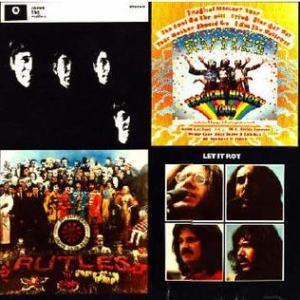
This is Spinal Tap was greatly influenced by All You Need is Cash, the 1978 profile of The Rutles, the “pre-fab four” that is a Beatles parody and homage. Written by Monty Python’s Eric Idle, the film features Mick Jagger and others speaking reverently about the group’s influence. But where Spinal Tap’s humor comes from poking fun at the imperfections of musicians and the tropes of music biopics, All You Need is Cash is more focused on replicating and spoofing The Beatles’ rise and fall. Segments specifically parody the “Paul is dead” craze, the “we’re bigger than Jesus” uproar, the visit to India, the rooftop concert, and so on. While it often underwhelms due to its overreliance on the Beatles chronology, the songs–created by Neil Innes of Bonzo Dog Band fame–hit it out of the park, mimicking the sound so well they could easily be confused for Lennon/McCartney originals. “Number One,” “Hold My Hand” and “Get Up and Go” are so infectious they could readily be added to the Beatles canon, and are so close to the source material that the music publisher forced Lennon’s name to be added to the composer credits after The Beatles had blessed the project. It may not stand up to repeat viewing, but the soundtrack is still likely to appeal to Beatles fans. 
 

Stillwater (Almost Famous, 2000)

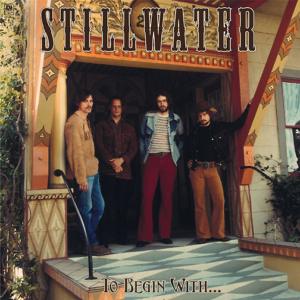
My favorite rock movie of all-time is Almost Famous, the 2000 autobiographical effort from writer/director Cameron Crowe that chronicles his time as a teenage journalist for Rolling Stone in the seventies. Crowe created Stillwater for the film, a composite group that combines elements of The Eagles, Led Zeppelin and The Allman Brothers Band. In the film Stillwater is, to quote Lester Bangs (Philip Seymour Hoffman) “a mid-level band struggling with their own limitations in the harsh face of stardom.” The group’s music, created by Peter Frampton and Crowe’s then-wife Nancy Wilson of Heart, is tasty seventies stadium rock. In a movie filled with great lines, this one from lead singer Jeff Beebe (Jason Lee) perfectly encapsulates the motivation of many classic rockers: “Some people have a hard time explaining rock’n’roll. I don’t think anyone can really explain rock’n’roll. Maybe Pete Townsend, but that’s okay. Rock’n’roll is a lifestyle and a way of thinking and it’s not about money and popularity. Although some money would be nice. But it’s a voice that says, ‘Here I am–and fuck you if you can’t understand me.’ And one of these people is gonna save the world. And the chicks are great.”  

Honorable Mentions:

Citizen Dick (Singles, 1992)

Daisy Jones & The Six (Daisy Jones & The Six, 2023)

Marie DeSalle (High Fidelity, 2000)

Drive Shaft (Lost, 2004-2010)

Troy Dyer (Reality Bites, 1994)

Hedwig and the Angry Inch (Hedwig and the Angry Inch, 2001)

Mouse Rat (Parks & Recreation, 2009-2015)

The Oneders (That Thing You Do!, 1996)

Sex Bob-Omb (Scott Pilgrim vs. The World, 2010)

Style Boyz (Pop Star: Never Stop Never Stopping, 2016)


Music Memoir Roundup

I am an absolute sucker for music-related memoirs. If you’re an artist I love and take the time to write a book, I can practically guarantee you I will read it. I don’t even have to like your music; if I think you have a compelling story to tell or someone I respect recommends your book, I’m all in. The book section at Paradise Found Records is always well-stocked with new and used titles. I previously wrote about some of my favorites of the genre. Here are five recent releases I’d recommend.

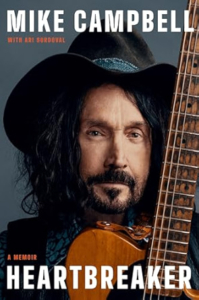
Mike Campbell–Heartbreaker, A Memoir

You may not know who Mike Campbell is but you know his music. As lead guitarist in Tom Petty and the Heartbreakers from the group’s inception, he co-authored some of Petty’s most popular songs and lent sterling guitar work to nearly every song Petty released in his long, illustrious career. Campbell is highly introverted and thus functioned as a perfect sideman: while contributing much to what made Petty one of the most successful American rock acts of the last fifty years, he was perfectly content to stay in the background and avoid the spotlight except for when he was adding screaming guitar solos to classics like “American Girl” and “Runnin’ Down a Dream.” Campbell was also willing to do some of Petty’s dirty work for him: when bandmates pushed back on what they felt was unfair compensation for their contributions, Campbell was the one to remind them that they were in the Tom Petty business, a fact he also had to remind himself of on occasion. Campbell’s memoir can be a little technical at times–multiple sections address his style with detail only a fellow guitar player can appreciate–but Heartbreaker is still required reading for all Petty fans. It’s an inside look at the journey from struggling Gainesville rock band to musical legends with a unique perspective only Campbell can provide, including on Petty’s tragic, unexpected passing at sixty-six in 2017.

Notable excerpt, regarding a classic song Campbell wrote for Mick Jagger: 

“Mick loved the song. But the next thing I knew, Tom said he wanted it for his record. I thought, what a coincidence; what interesting timing. But I was happy. I would have gotten a kick at having written a song for Mick, but that’s where my songs belonged, on Tom Petty records. I couldn’t wait to hear what he had done with it.

Tom wrote lyrics and brought it in a few days later. We set up with the whole band to run through it. I asked Tom what it was called.

“It’s called “You Rock Me.”

I stared at him.

“It’s called “You Rock Me?

“I know, I know.”

We played the song through with the whole band. It sounded great.

Benmont looked over at Tom.

“Are you singing, “You rock me?”

“Yeah.”

You rock me, baby?”

“Yeah.”

Benmont looked appalled.

“That’s just…” Benmont shook his head. “You can’t sing ‘you rock me, baby. You just can’t.’”

“I know, I know.”

Tom came back a few days later and said he’d fixed it. Steve kicked us off and we launched into the song. Tom stepped up to the mic and sang. Every word was the same. But when we played the chorus, instead of singing, “You rock me, baby,” Tom sang, “You wreck me.”

I shook my head. Incredible. Half a syllable, and it changed everything. How did he do it?”

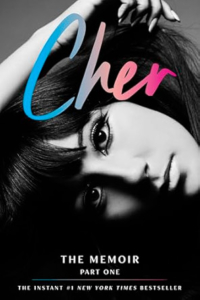
Cher–The Memoir, Part One

Cher might not fit the classic description of a rocker, but she was a member of the Wrecking Crew session band that played on many hits in the sixties and she worked extensively with Phil Spector. Part one of her memoir focuses on her first thirty-five years, including her launch into music and later TV stardom, and ends just as she begins acting (part two, covering the second half of her life, is due to be released this fall). In addition to its memories of an early life filled with amazing stories about growing up poor amidst Hollywood royalty, the book chronicles her rise and fall (and rise again) starting in the mid-sixties, when she parlayed her friendship with Sonny Bono into a highly successful career. Sonny and Cher struggled to break through until they visited the UK in 1965. Their hippie-gypsy hybrid fashion sense took the Brits by storm, knocking The Beatles (temporarily) off the top of the charts and paving the way for stardom when they returned home to Los Angeles. After a few years of hits, they were seemingly on the way to obscurity playing in nightclubs until, out of boredom as much as anything else, they added humorous banter to their stage show. As they finetuned the interplay, they transformed their act and ultimately created one of the most popular television variety shows of the seventies, hosting a who’s who of musical legends including David Bowie, Elton John and Bette Midler among many others. One revelation about the partnership: while Sonny Bono exploited her both financially and emotionally, Cher still harbors a surprising warmth for her longtime partner. 

Notable excerpt, regarding Cher’s joining the Wrecking Crew:

“One day in the summer of 1963, Darlene Love didn’t show up at the studio because her car had broken down. Phillip (Spector) was already behind schedule in recording the Ronettes’ next two singles, “Be My Baby” and “Baby, I Love You,” and this delay frustrated him. Time cost money, so he told everyone, “Let’s get something down anyway and I’ll play with it and see how it sounds. Sonny, you join the backup girls.” We all knew that if he asked for Sonny, he was desperate.

Undeterred, Sonny bounced up to the microphone like a puppy, and then I heard Phillip utter the words, “Okay, Cher, you too. Get up there. Sonny tells me you can sing.”

I almost fainted. Was he fucking nuts? Darlene was one of the greatest singers of all time. I’d be too low for the girls and too high for Sonny. I tried to explain my vocal qualifications to Phillip, but he interrupted me, saying “I don’t care, I just need noise. Get out there and sing.”

But what if my noise was off-key? I thought with a shiver. I stepped up to the microphone for the first time in my life and took my place next to Sonny, Fajita and Gracia. I was shaking so much I had to lock my knees together and fix my focus on the little speaker that allowed us to hear the rest of the song. There were no headphones at Gold Star; we all just played and sang. It was so intimidating. Phillip asked Gracia, “Okay, tell me what you’ll be singing,” and she went through her notes. When he did the same with Fanita, I thought I’d pass out on the floor if he asked me, as I wouldn’t have a clue what to say. I was planning on just listening to the girls and doubling up on Sonny’s part, then hiding until it was over. Thank God Phillip never asked, but then I think he kind of knew not to.

We were counted in and started singing, and somehow a sound came out that seemed okay. I didn’t know if it was luck or Larry’s skills. I began to relax, but then Phillip made everyone stop. “Cher,” he called. “Step back.” I wasn’t quite sure what he meant at first, but Sonny made a gesture for me to move away from the mic, so I took one step away and we started again.

Darlene was back in the studio the following day, and there was a collective sigh of relief. That woman was a force of nature, and still is, and the only one to stand up to Phillip if she didn’t like something. The moment she walked back in, she took one look at me standing in her place and shook her head. Then she threw it back and let out that great big laugh of hers as everyone exhaled. Then she looked at Sonny and said, “What you doing here?” She joined us at the mic, and when we started singing, the same thing happened as the previous day. “Step back, Cher. Step back,” Phillip instructed. “You’re still cutting through.” This went on and on until I must have been three feet from the others and virtually up against the wall. Eventually Darlene quipped, “She’ll be in Studio B at this rate!”

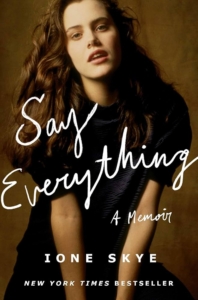
Ione Skye–Say Everything, A Memoir

Ione Skye might not be a musician, but she’s the next best thing, a rock’n’roll muse who has dated, married and/or inspired many successful artists. The daughter of famed British folkie Donovan, Skye is more widely known for an excellent film and television career that has seen her play featured roles with an eye for quality over commercial appeal. Skye entered into a long relationship with Anthony Kiedis of the Red Hot Chili Peppers when she was only sixteen and he was twenty-four, and stuck with him through his extended struggle with heroin (which he wrote about in “Under The Bridge,” the group’s breakthrough hit). She broke up with Kiedis just as he was on the brink of stardom to start a relationship with mutual crush Adam Horovitz, better known as Ad-Rock of The Beastie Boys, the group that played a huge role in bringing rap to a white audience for the first time. Skye later flirted with and then acknowledged her bisexuality, which is what ultimately ended her marriage to Horovitz. Through a film career that included working with a then-unknown Keanu Reeves and later John Cusack in arguably Cameron Crowe’s best movie, Say Anything, Skye slowly grows more comfortable in her own skin, culminating in developing a relationship with the father that abandoned her as a child and a still-going-strong union with Australian musician Ben Lee.

Notable excerpt, regarding the most iconic scene in Say Anything:

“As Cameron told me the day we met, Say Anything was very much a love letter to music. Throughout filming, there were endless discussions about what song should play when Lloyd boom box-serenades Diane outside her window. At the time, no one knew the scene would become iconic, but we knew it was significant–the “Romeo under the trellis” moment, as Cameron put it. He’d originally written the scene while listening to Billy Idol’s “To Be a Lover,” so that song made it into the first draft of the script, but we all knew it wasn’t right. After weeks of exchanging mixtapes, Cameron and Johnny decided Lloyd would blast “Turn the Other Way” by Fishbone up to Diane’s window.

Johnny and I were scheduled to film our respective sides of the scene on separate days, which I was glad about. Johnny was being cynical about the whole thing. He thought Lloyd’s grand romantic gesture would come off as cheesy. “Why does he have to hold the boom box up?” he kept arguing to Cameron. “It makes him subservient. I want to try it with the box on the car beside me and I’ve got my arms folded and I’m defiant. She broke up with me! I’m pissed!”

Cameron felt certain that Lloyd should be all in, not holding on to his cool by sitting down, but he agreed to shoot the scene both ways to keep the peace. (Lazslo later confessed to Cameron that he hadn’t bothered to load film into the camera for Johnny’s version; he was that sure Cameron was right.) Initially, they filmed on the street outside Diane’s house, but Cameron wasn’t happy with the footage. Later, we were doing the 7-Eleven scene where Lloyd brushes glass out of Diane’s path (a nod to the movie’s origin story), and Lazslo noticed a tree-lined stretch of park across the street. “That’s our boom box spot!” he said. “Quickly, before the sun goes down!” The crew rushed over to set up the shot, and with minutes to spare, Johnny did the scene, wielding his portable stereo like a dare. The mixture of heartbreak and defiance he brought to the moment made it perfect.

Well, almost perfect. When Cameron reviewed the footage, he realized the funky, raucous “Turn the Other Way” made Lloyd come off less as a thinking teenager’s heartthrob and more like a crazed Fishbone fan. So the song search began again. Eventually, Cameron would have an epiphany while listening to his wedding mixtape. When Peter Gabriel’s “In Your Eyes” came on, he knew it was the one. Three other films were vying for Gabriel’s big song, but Cameron went to the mat to get it, and the rest is history.”

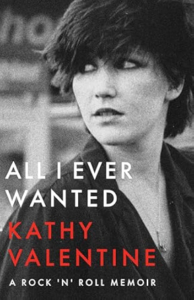
Kathy Valentine–All I Ever Wanted, A Rock’n’Roll Memoir
One of the more notable reunion sets at Coachella this year was by The Go-Go’s. While I can’t claim to be much of a fan, the fact is they were the first all-female group to top the charts with songs they’d written and performed themselves, an accomplishment that culminated in their induction into the Rock’n’Roll Hall of Fame in 2021. The group is known for their power pop and hits that included “We Got The Beat” and “Vacation,” but they emerged from the Southern California punk scene alongside bands like X and Black Flag. Valentine’s memoir is a surprisingly compelling look at a career in music, from her first being a fan of the band to the thrill of connecting with the other members and ultimately switching from bass to guitar to join up. The Go-Go’s were ahead of their time, and the book chronicles the group from early rehearsals through their fracture and ultimate reunion. Through it all Valentine struggles with a lifelong alcohol addiction that fogs many of her experiences and poisons her relationships with family and friends until she finally gets sober in her fifties. I can’t say it made me want to listen to more Go-Go’s, but I certainly respect them a lot more now.

Notable excerpt, regarding the impact of publishing royalties on band harmony:

“With a couple million records sold and being on the road for eight months straight, a significant payday was long overdue. At our accounting firm I sat on the edge of my chair in an office waiting for my check to be issued. Looking at it, I swooned. I had made over $300,000, almost $800,000 in present value. It was more money than I knew what to do with (of course, the accountants had ideas for that). My head reeled. I’ll buy a car! Definitely get a cool place to live. Almost out the accountant’s door, I turned back, suddenly curious. “Hey, what did everyone else get?” Surely it couldn’t be a secret. Everyone had busted ass to make the record sell. The numbers came: Charlotte, with most of the songwriting and the biggest hit, got a huge check. Next came Jane, just under Charlotte’s. My amount came next. Our lead singer, the star with the charisma and voice, made less than me, and Gina, the hardworking drummer who had turned the band into contenders, made the least. I had to let it swish around in the wash cycle of my brain for a while: this didn’t bode well for the band. The first real money had been paid, and there were some awfully big gaps.

It didn’t take long before I got the call. Gina had asked too. Our little drummer was a stick of dynamite, her fuse always lit and ready to explode. Most of the time that meant just playing with all her heart and soul, like a machine, making every ounce of her energy pour into her limbs and onto her drum kit. Other times it meant being a manic, loudmouthed ballbuster, yelling out truths most people would rather not hear. Gina had a straightforward world view: hard work pays off; be loyal and fair; honor your family and friends. The discrepancy in our earnings violated her sense of justice, and I couldn’t blame her. It gave me a big problem because everyone had to be happy and it had to be fun, or else all would be lost. My number-one priority had become keeping the band intact. I was living the experience of a lifetime and I wanted it to last.

Some issues aren’t clear-cut, black and white, one way is right and one way is wrong. I’ve had a lot of years to think about songwriting and income issues in bands and have my thoughts and opinions about it, but that’s all they are. There’s no law or manual. In the case of the Go-Go’s, the money issue became like a sixth unwanted member, always in the room.”

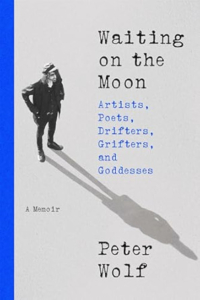
Peter Wolf–Waiting on the Moon: Artists, Poets, Drifters, Grifters, and Goddesses
Peter Wolf was first known to some as Woofa Goofa, the late-night rock disc jockey on Boston’s WBCN in the sixties; later he became the lead singer of the J. Geils Band, the Boston band that mixed rock and R&B and struggled to break through commercially for ten records before finally hitting the top ten with “Centerfold” and “Freeze Frame” in the early eighties. Wolf’s excellent new memoir contains surprisingly little about the J. Geils Band; instead, it is a fascinating look at the life of a painter, singer and first and foremost culture fiend. Wolf saw and hung out with Bob Dylan in the clubs, lived with David Lynch in college, married Faye Dunaway, and spent serious time carousing with Van Morrison, Keith Richards, Mick Jagger and many other musicians, poets, professors and playwrights that drove American art in the second half of the twentieth century. Above all else Wolf is a lover of the blues. His stories of hanging out with Muddy Waters, James Cotton, Howlin’ Wolf and John Lee Hooker reveal an aesthete who was both a fellow traveler and fan. His roles as DJ and rock star helped him become close friends with many of his idols, and this highly entertaining book is filled with engrossing stories and encounters that make it very hard to put down.

Notable excerpt, on hanging out on Willie Nelson’s bus:

“Willie and his mentor, the eighty-one-year-old honky-tonk pioneer Ray Price, were in the front lounge passing each other a large vape pipe attached to a hookah sitting on a table in front of Willie. Ray, once roommates with Hank Williams, was an important originator of the real whiskey-soaked honky-tonk sound, with a young Willie Nelson on bass in his band.

“Hey, Merle (Haggard), what’s in that bottle you’re holding?” Ray asked. “How about giving my coffee a bit of a booster shot?”

“Same for me,” said Willie. I thought Willie had stopped drinking, but maybe this was a special occasion. Merle obliged and said, “Pete, grab yourself one of those coffee cups and let me give you a refill.” They passed the pipe to Merle, who held on to it, taking several long, deep inhales.

“We just did some recording, and Pete here set up a whole studio in the dressing room.”

“Hope it’s a hit,” Willie said.

Merle continued chatting as he reluctantly handed back Willie’s pipe after I passed on having some. Merle began telling a story about the first time I met his longtime right-hand man, Fuzzy Owen, one of the architects of what became known as the Bakersfield Sound in country music. Merle said, “One night Pete came to my show and joined me and the band in catering. Pete sat right across the table from Fuzzy, and I introduced him. He seemed really excited about meeting Fuzzy, so he starts asking Fuzzy all sorts of questions about how he produced his records back in the day, how big the studios were, what kind of microphones he used, what amplifiers did the players have, all sorts of questions. Fuzzy just kept nodding his head and sometimes just saying, “Yes, sir, them sure was the good old days.’ Pete keeps asking Fuzzy questions, and Fuzzy just keeps nodding his head, until I finally had to break in and say, ‘Pete, you’re just wasting your breath. He ain’t got on his hearing aids. Fuzzy’s stone deaf. He can’t hear one damn word you’re saying!’”

Both Willie and Ray started laughing as it was the funniest thing either of them had ever heard.”

Insider’s Guide to Vinyl Shopping–Part One

Welcome to the latest Paradise Found Records blog. One of my favorite rock films is Almost Famous, the 2000 movie from director Cameron Crowe that recounts his days as a teenager writing for Rolling Stone in the seventies. There are no shortage of great lines, but my favorite is when Penny Lane, the “band-aid” played by Kate Hudson, tells William Miller, the Crowe stand-in played by Patrick Fugit: “If you ever get lonely, just go to the record store and visit your friends.” I have spent a lifetime visiting my friends at the record store. Not only is it a great way to discover new music and revisit beloved classics, it’s always a fun experience. I never leave unsatisfied, even on those rare occasions when I walk out empty-handed. Our owner Will Paradise has also spent decades visiting record shops around the world. It’s no accident that Paradise Found offers a varied, extensive inventory for shoppers ranging from newbies fresh off the acquisition of their first turntable to collectors in search of rare, pricey vinyl.

With that in mind, here is part one of my list of hacks for more effective record-shopping. A good record store can be overwhelming in its selection; while I regularly spend hours scouring bins with my want list in hand, you may have less time to browse and it can’t hurt to know how a hardcore collector shops.

Perhaps the best proof of my passion (my wife might call it an obsession or, less kindly, a disease) is this: although I could splurge and buy everything on my want list on the music database/marketplace Discogs or eBay tomorrow, what would be the fun in that? I prefer the thrill of the hunt, for example checking bins for Lulu’s New Routes, the hard-to-find 1970 LP recorded at Muscle Shoals Sound Studio with Duane Allman on guitar, in order to achieve the excitement of having my eyes go wide when I finally discover it “in the wild.” Some records take years to find; Rumours and Abbey Road are always going to be in stock. 

Since there are many facets to record shopping, I’ve divided them into sections. Obviously, your results may vary and you’ll shop in whatever way provides the greatest pleasure. If in the end you feel like you’ve visited your friends–and I like to think that includes the knowledgeable, passionate and helpful music lovers that work at both Paradise Found locations–then you can say “Mission accomplished.”

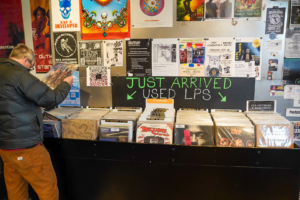
JUST ARRIVED USED LPs

Whenever I walk into Paradise Found or any other record shop, I always make a beeline for the “Just Arrived Used LPs” section. At our Boulder store it’s near the back, where Jon Martinez, our seasoned record buyer and man with the most vinyl knowledge in Colorado, works. We buy a lot of vinyl, and everything but the pricier collectible and bargain bin material passes through the Just Arrived Used LP bins. Experienced shoppers know the best stuff often never makes it out of these racks before being grabbed. We pride ourselves on having new, sealed copies of the latest releases, but buying out of the just arrived bins is a great way to discover new (and old) music, pounce on rare stuff, and sometimes save a little on more recent releases. We also segment these bins by genre so that you don’t have to search through Folk if you’re strictly looking for Jazz. Albums that haven’t sold out of these bins ultimately get moved to the specific artist’s section in the alphabetical bins. If it takes more than thirty seconds for me to get from the front door to the just arrived bins, I’ve probably slipped and fallen on the way in my urgency to get there before someone else does.
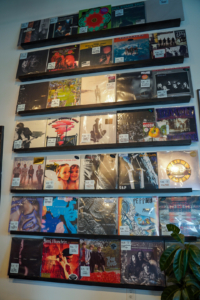
THE WALL

No, I’m not referring to the Pink Floyd album (although any fan of that band will tell you it’s essential), I’m talking about the wall to the left of the cash register in our Boulder store where we put the very rare, expensive items. We display some of our pricier vinyl along our east side, but those tend to be sealed box sets and recent UHQR releases (e.g. the recently reissued Steely Dan series of multi-album, 45 rpm pressings that sell new for $175 to hardcore audiophiles). While you may find audiophile material on the wall, you’re more likely to see extremely hard-to-find releases that make collectors salivate.
Wall records can cost hundreds of dollars, and often have some lore surrounding them. For instance, while there have been (per Discogs) 478 versions of The Doors’ excellent 1967 debut, the conventional wisdom is that the 1992 DCC Compact Classics pressing has the best sound. A clean copy of that album will run at least $250. Other rarities include vinyl editions from the CD heyday of the nineties and aughts, when vinyl pressings practically disappeared. For example, The Beatles’ Let It Be…Naked, an edition of the classic with an different mix and varied song selection that’s devoid of the Phil Spector touches that Paul McCartney hated, will run around $200 since it came out in 2003 when next to no one was buying records.

Nineties hip-hop and indie records similarly sell for big bucks; they are highly coveted by many collectors since it is not unusual for them to not have been repressed in the intervening years, although that is changing as record plants ramp up production in response to increasing vinyl demand. Once rare Fiona Apple and Grateful Dead LPs are now readily available at lower prices in newer editions, although the original pressings are still desirable to collectors. The Wall is always my second stop after perusing the Just Arrived Used LPs section. Of course, it’s also the budget-busting section of the store: finding a grail combines the excitement of landing the big fish with the recognition that I’ve spent (or overspent) my budget for that day’s excursion. But such is the life of the intrepid record shopper.

VINYL WEIGHT

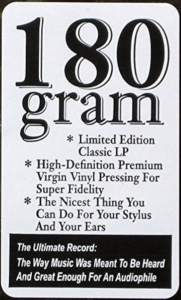
One aspect common to the vinyl resurgence of the past decade has been the proliferation of 180 and 200 gram pressings. But what does that actually mean? Back in the days before CDs, albums rarely mentioned their weight; indeed, most albums were 140 grams or less. That said, there are some specific advantages to heavier vinyl.
Generally speaking, the weight of an LP has no impact on the sound quality unless you have a high-end audio system. Both the width of the grooves and the RPM speed are more impactful. However, 180 gram and heavier vinyl is sturdier and will provide a longer shelf life and also be far less likely to break. Heavier vinyl is also less likely to warp, which impacts both the sound quality and the potential to damage your cartridge. Finally, heavier vinyl provides a better platform for your stylus and turntable suspension, and as a result will minimize or eliminate vibration that a higher end stereo system may pick up, albeit often at barely detectable levels. That said, the source recording and the quality of the pressing ultimately have more to do with what you hear. Many manufacturers use the 180 gram description to attract consumers, but unless you consider yourself an audiophile you shouldn’t (pardon the pun) attach too much weight to the promotional stickers that record companies slap on records to make them appear more valuable. Remember, most LPs released before CDs were either 120 grams or 140 grams, and few people complained or attached much significance to the weight a record tipped the scales at.

Part Two of this series will discuss Mobile Fidelity Sound Recordings, Japanese pressings, Discogs and ways to take care of your collection. But first I’ll be back next month with the highlights from the list of just-announced exclusive Record Store Day releases out Saturday, April 20.


Black Friday Means Exclusive Record Store Day Releases!

Welcome to the November Paradise Found Records blog. Have you started building your holiday shopping list yet? Once again there are a bevy of excellent, exclusive Record Store Day releases for Black Friday, November 24. You can check out the full list of more than 170 titles here; you can also browse a copy at the front of both of our stores. As in the past, please note that there are no holds, and everything will be sold on a first come, first served status as we can’t guarantee stock. Here are the 20 Black Friday releases I’m most excited about, in alpha order.

Asteroid City Original Soundtrack

This 2LP orange pressing features selections from Wes Anderson’s 2023 film, including a new track from Jarvis Cocker and a jukebox of fifties and earlier classics by Bob Wills, Slim Whitman, Bill Monroe, Tex Ritter and others. 

The Doors – Live in Bakersfield

This new-to-vinyl live double album from August of 1970, less than a year before the release of L.A. Woman, their final effort, finds the trio in a bluesy, exploratory mode. The show features a thirteen-minute “When The Music’s Over,” a fifteen-minute “The End” and a fifteen-minute jam through “Mystery Train” and ”Crossroads.”

The English Beat – I Just Can’t Stop It
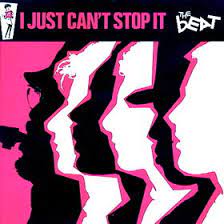
The energetic, politically-charged ska of early eighties British label 2 Tone Records never found massive success outside the UK, but this record came close. The “English” Beat–they had to add the modifier due to a US group with the same name–crafted a debut that encapsulated the movement’s ethos: hopped-up dance music that combined punk energy with Jamaican rhythms performed by BIPOC and white musicians focused on a message of unity. This 2LP release includes a first-ever bonus LP of B-sides, rarities and extended versions.


Faces – Had Me a Real Good Time…with Faces! In Session & Live at the BBC 1971-1973 

Before Rod Stewart went on to solo glory, Ronnie Wood replaced Mick Taylor in The Rolling Stones and Kenney Jones replaced Keith Moon in The Who, The Faces made raw, raunchy rock. They might have sounded at times like they were about to careen off the rails, but they launched a thousand bar and hair bands. These previously unreleased gems come from three separate radio shows, including a 1971 John Peel BBC Concert. 

The Flaming Lips – Yoshimi Battles The Pink Robots – Live at the Paradise Lounge, Boston, Oct. 27, 2002

While some prefer The Soft Bulletin, my favorite Flaming Lips record is Yoshimi Battles the Pink Robots, the 2002 epic that included “Do You Realize?”, their second biggest hit after “She Don’t Use Jelly.” This pink pressing is a new-to-vinyl selection of songs from a Yoshimi-era show first heard on 2022’s 20th anniversary expanded CD box. 

Grateful Dead – Fillmore West, San Francisco, 3/2/69
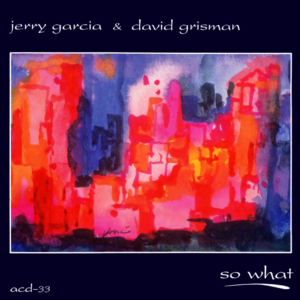
Deadheads are always well served on Black Friday. This year’s offerings include the first-time-on-vinyl 5LP box featuring the fourth and final night of the legendary 1969 Fillmore West run, originally released on a now-highly-sought-after 10CD box in 2005. Jerry Garcia lovers can also pick from two new-to-vinyl double albums of solo projects spotlighting the guitarist in duo mode. So What is a collection of outtakes from his collaboration with David Grisman, while Pure Jerry: Marin Veterans Memorial Auditorium, San Rafael, CA – February 28, 1986 finds Garcia with longtime sideman John Kahn.  

Noah Kahan – Cape Elizabeth EP

One of 2023’s biggest breakouts is New England roots-rocker Noah Kahan. This is a marble repressing of his 2020 five song EP recorded at the start of the lockdown and dropped with little notice. It’s sure to move, as the first edition has become increasingly hard to find as his fan base has grown exponentially.

Little Feat – Live at Manchester Free Trade Hall 1977

Little Feat’s classic 1978 live album, Waiting for Columbus, is widely recognized as one of the all-time greats of the genre. This new-to-vinyl 3LP set is the best of the three shows from Rhino’s excellent 5CD expanded Waiting for Columbus box released earlier this year. 

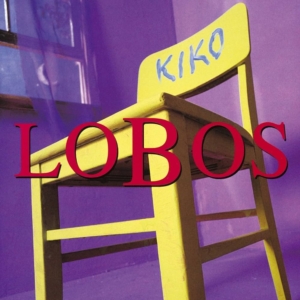
Los Lobos – Kiko

Los Lobos have released many great records in a forty-plus year run. This 30th anniversary 3LP deluxe edition of their sixth, best-selling effort includes a 3rd record of previously unreleased demos plus the original album expanded to two discs for increased fidelity.

Aimee Mann – Dead Eyes

Actor/comedian Connor Ratliff turned a career-threatening rejection from Tom Hanks into a popular personal investigational podcast with the help of many famous actors including, eventually, Hanks’ own son Colin. This single features the podcast’s theme by Aimee Mann, our favorite highly-literate sometimes-depressing singer-songwriter, along with her demo of the theme on the flip side.

My Morning Jacket – Happy Holiday!

My Morning Jacket are re-releasing this 2011 digital holiday collection on vinyl with three new tracks, the group’s first new material since their eponymous 2022 effort. Look for the “Snowy Version” of Waterfall II’s warm-fireside-evoking “Welcome Home” and the “Snow Version” of the band’s beloved ballad “Wonderful (The Way I Feel).”

Joni Mitchell – Court and Spark Demos

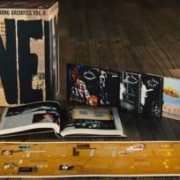
The latest edition of the Joni Mitchell archives came out last month, a 5CD treasure trove from her early to mid seventies commercial peak. This album features the holy grail from the box, a set of demos from Court and Spark that includes a jaw-dropping twelve-minute-plus piano medley of three tracks from the popular 1974 release and an early demo of “Help Me” that casts the hit in a far more intimate light than the better-known version.

Willie Nelson – Shotgun Willie

Willie Nelson’s sixteenth studio release was a landmark in his career; it included his cover of “Whiskey River,” which would become a staple of his live shows from that point forward, and a stirring cover of Leon Russell’s “A Song For You.” For its 50th anniversary Rhino is releasing it in a 2LP format with the second disc of new-to-vinyl outtakes and alternate versions.

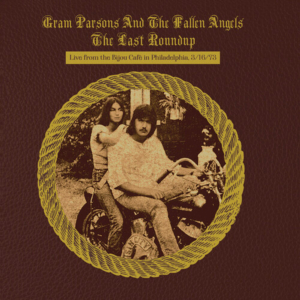
Gram Parsons and the Fallen Angels – The Last Roundup: Live from the Bijou Cafe in Philadelphia March 16 1973
This one is a real discovery and a must for Americana fans: a newly unearthed soundboard recording of the next to last live show by country-rock icon Gram Parsons, from the Bijou Cafe in Philly, with backing from Emmylou Harris and the Fallen Angels. The double album features highlights from his solo career and stint with the Flying Burrito Brothers, and had spent the last fifty years in the vaults before famed record store Amoeba decided to launch a Kickstarter campaign to fund its production.

Rilo Kiley – Under the Blacklight

Between her stints as a child actor and rock star in The Postal Service, Jenny Lewis piloted this excellent Los Angeles indie-rock quartet. This first repress of the group’s fourth and final effort from 2007 comes on purple vinyl and leads off with “Silver Lining,” still a highlight of her live sets.

Olivia Rodrigo – GUTS: the secret tracks

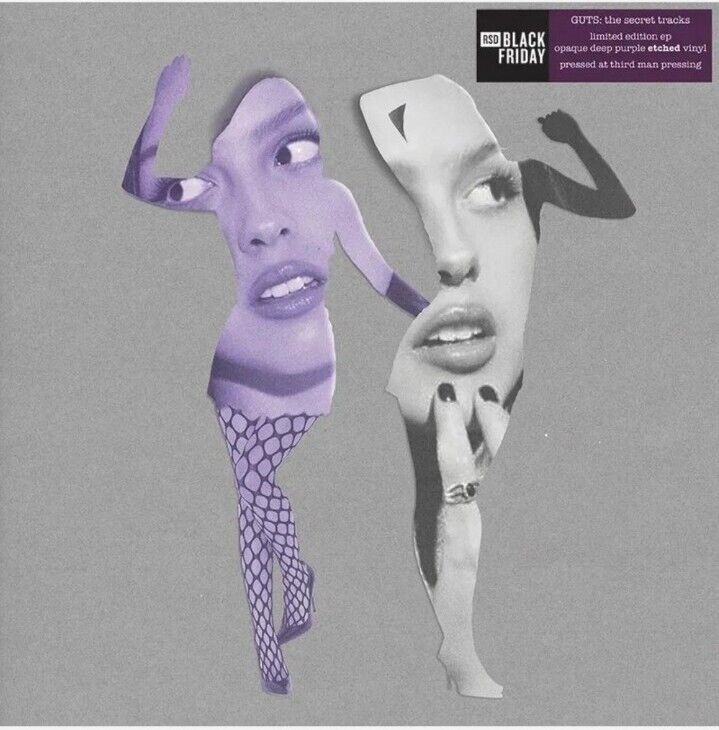
The hottest item this Black Friday will be surely this EP from Olivia Rodrigo, who’s 2023 sophomore effort GUTS rocked surprisingly hard. The EP compiles the four “hidden” tracks from the different editions of the album on “deep purple” vinyl with a butterfly etching on the flip.

Billy Strings – California Sober

Billy Strings has taken the bluegrass world by storm over the past few years; no other bluegrass act sells as many tickets or can fill hockey arenas. This 12” single on green vinyl (of course) features Strings duetting with Willie Nelson on his song “California Sober” on the A side and his cover of “Whiskey River” from Willie’s 90th birthday celebration at the Hollywood Bowl this past April on the B side.

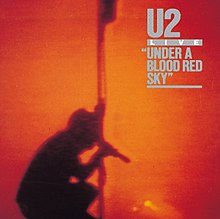
U2 – Under a Blood Red Sky

Forty years ago this past June, U2 played to a half-filled Red Rocks in the middle of an intense summer thunderstorm. The highlights from that show and two others were combined to create this live album, which played a big part in building their legacy as a powerful live act. For its 40th anniversary the group is releasing the record on red vinyl.

War – The World is a Ghetto

War’s fifth album came out in late 1972 and went on to be the biggest selling record in the US the following year. A classic hybrid of soul, funk and jazz, it included “The Cisco Kid,” the band’s biggest hit other than “Low Rider,” along with the thirteen-minute instrumental jam ”City, Country, City” and the ahead-of-its-time title track. For Black Friday, Rhino is releasing a 5LP box that includes a double album of the original release with outtakes on gold vinyl plus a 3LP “making of” collection.

X – Ain’t Life Grand

Southern California’s best punk rockers are still going strong all these years later. This Black Friday the group is repressing its fifth record for the first time since 1985 and adding a 7-inch cover of “Wild Thing.” Ain’t Love Grand might not have the intense energy of the best X LPs, but it’s still stellar and kicks off with the 1-2 punch of “Burning House of Love” and “Love Shack” (not the B-52s’ “Love Shack,” to be clear). 

Sticker Mule

Dig our custom stickers? If so, head over to stickermule.com and support a local business!

Black Friday & Holiday Shopping Guide

There is a stacked slate of music and music-related books out this holiday season, as well as more than a hundred Record Store Day “Black Friday” exclusives. To help you navigate the plethora of choices, here is a guide for the music lover on your shopping list …

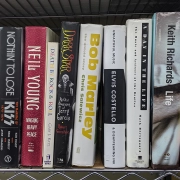
We Have a Large Selection of Rock Books!

What’s almost as enjoyable as listening to music? Reading about it! At Paradise Found, we have a large selection of new and used music books. Here are a few of my favorites of the genre.

2021 Music Preview

“Got a feeling ’21 is gonna be a good year,” sang Pete Townshend in Tommy… Here is a list of musical releases on the horizon for the coming year.

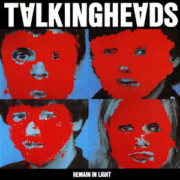
Talking Heads ’20: How To Buy

Quiz time: what band that was hugely successful in the seventies and eighties has turned down mega-dollars to reunite since? Need some clues? How about a buying guide to all their albums…

Will’s Holiday Music Mix 2019

If you know Will, you know that “holiday” does not always rhyme with “happy”. He’s been doing these mixes for over two decades, as a holiday gift for close friends, and just now making them into Spotify lists to share more widely.